Scent Zoning in Open-Plan Living Spaces
A unified scent keeps open-plan homes coherent without overwhelming separate zones.
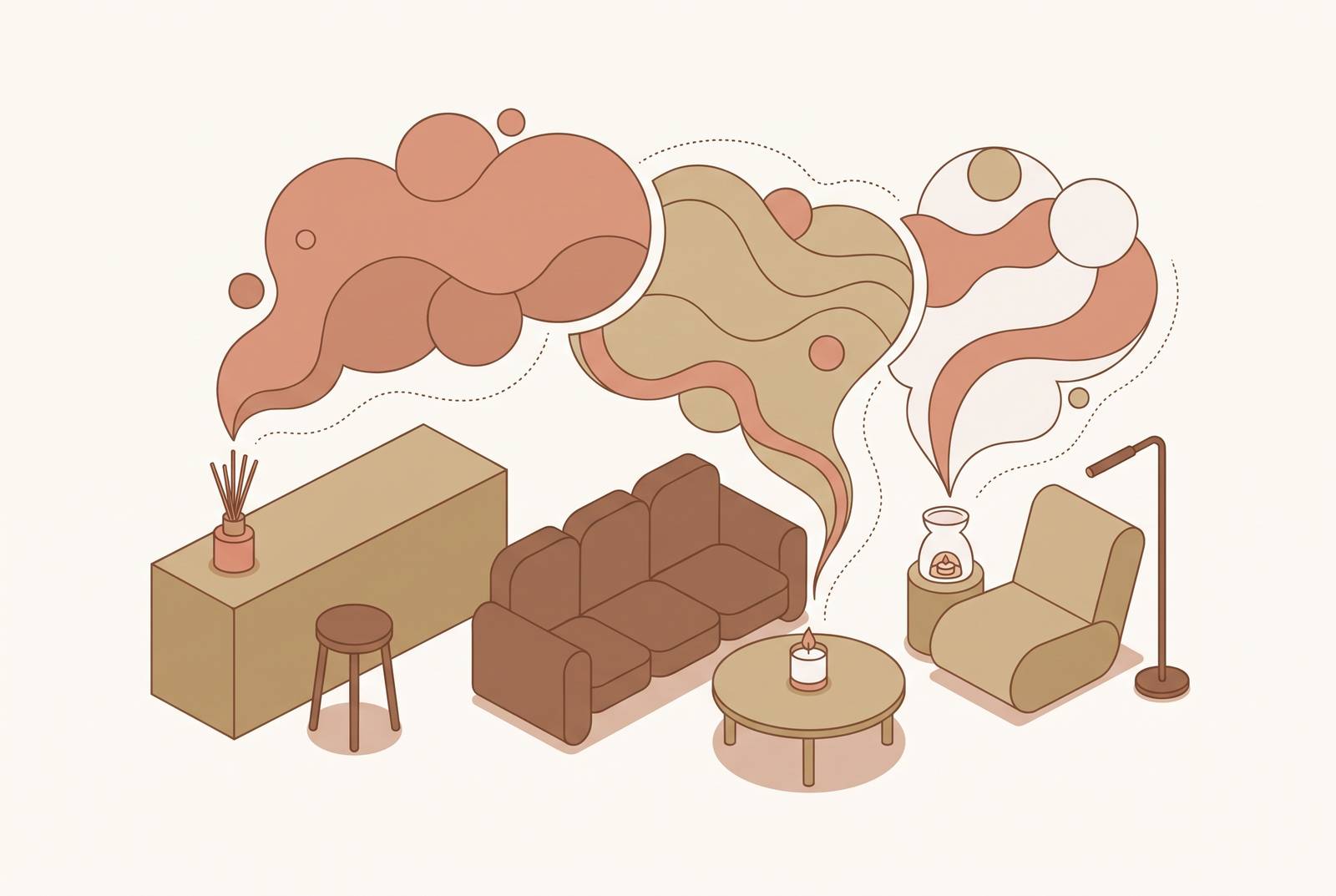
Scent zoning in open-plan living spaces is less about assigning a fragrance to every activity than giving a connected home one coherent character. The most effective strategy combines restrained output, placement guided by airflow, and a fragrance comfortable around both dinner and the sofa.
Why open-plan spaces break the logic of room-by-room scenting
Open-plan homes are the easiest spaces both to scent and to over-scent. Without doors, fragrance can move freely between activities, but that freedom removes the boundaries that make room-by-room scenting manageable. In a closed bedroom, a diffuser has a set amount of space to fill. A kitchen-dining-living layout gives the same device a larger, irregular space with several competing airflows. Fragrance can still be strong in a larger space.
Instead, the scent follows currents shaped by ventilation, fans, windows, exterior doors, and staircases. What feels subtle at the sofa may be strong at the dining table simply because air delivers more fragrance there. Cooking, cleaning products, and open windows already change the room’s sensory character, so diffuser output joins an existing mixture.
How fragrance actually travels through an open floor plan
Before choosing a position or output level, identify where air enters, where it exits, and where it slows. Those slower areas are where fragrance lingers longest. Square footage describes size, but airflow describes distribution. HVAC vents are a dominant influence, and a diffuser directly beneath a supply vent can have its output swept away before it settles into the intended zone. Ceiling fans move fragrance across the room faster, helping it reach more of the space and spread more evenly between high and low areas.
Furniture complicates that pattern in useful ways. A sofa facing away from the dining area, a bookshelf perpendicular to a wall, or a kitchen island changes where air passes and pools. These objects divide more than the view. They create micro-zones that can make the same fragrance feel more present in one position than another, even though no door separates them.
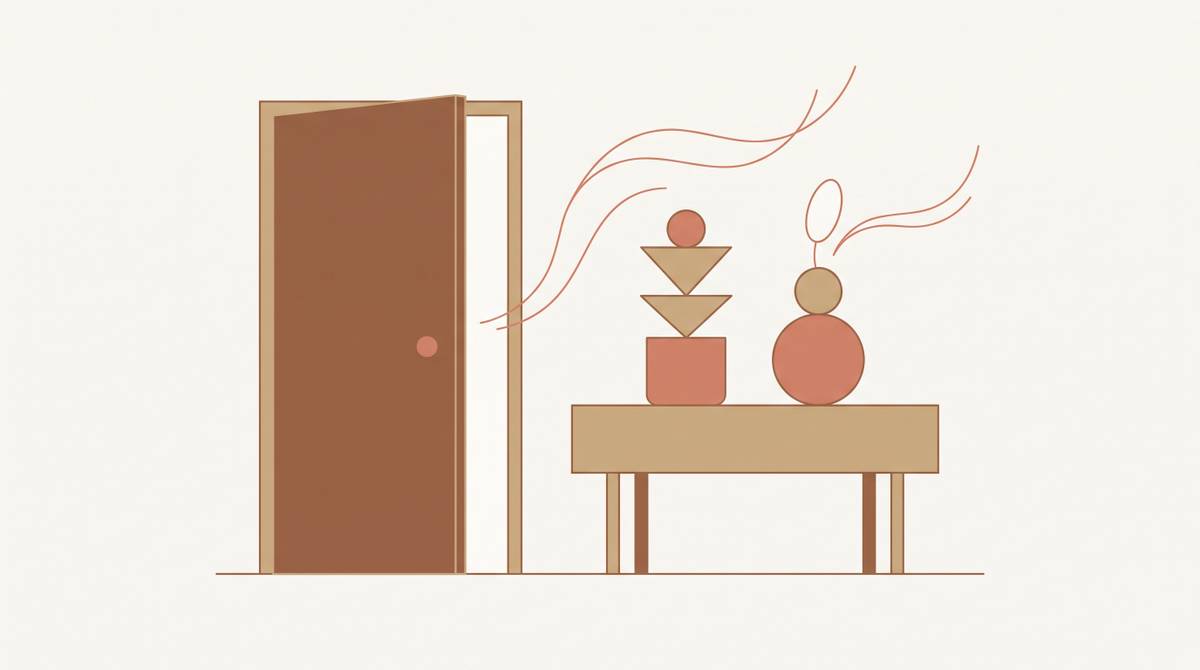
Movement through the home adds another route. Busy walkways become corridors for scent, making the entry and paths toward a hallway or staircase particularly significant. Open bi-fold or sliding doors can draw a lot of air out, carrying fragrance outdoors.
Why coherence across zones outperforms a separate scent for each one
Different fragrances in adjacent open-plan zones create competing trails. Bright citrus by the kitchen and dense woods near the sofa may each be appealing alone. Where those trails converge, often around the dining area, the result is an uncontrolled blend. Air does not respect the furniture plan.
Treat the connected space as one olfactory environment, with a dominant character and modest differences in intensity. The same fragrance needs to feel fresh near the kitchen and grounded near the sofa while still smelling like one scent. This is the appeal of a restrained, luxury-hospitality approach. Genuine distance or partial walls can allow more variation, but adjacent furniture groupings do not provide that separation.
For variety, change the fragrance by time or occasion. A fresh weekday morning and a deeper evening gathering can have different characters because they happen sequentially. Existing fragrance layers still need consideration. Candles, reed diffusers, and cleaning products work more coherently with a signature scent when they belong to the same fragrance family.
Choosing the right diffusion technology for a large, connected space
Cold-air, or nebulizing, diffusion is particularly suited to this shared-air strategy because it atomizes fragrance oil into a fine, dry mist using compressed air. The light particles stay in the air and follow natural airflow, which helps carry fragrance through a large, unevenly shaped space. No water or heat is involved. That preserves the fragrance’s top, heart, and base notes without alteration by temperature, supporting a consistent character from different positions. Waterless diffusion also adds no humidity and avoids depositing a wet mist on nearby surfaces.
Control is as important as the diffusion method. Controls for intensity and scheduling help keep the scent in the background, even in a large floor plan where it may be tempting to turn the power all the way up. Where controls allow adjustment from a seat, the fragrance can be judged from the sofa or dining chair. That is where the experience actually takes place.
Ultrasonic, water-based diffusers offer a softer ambient effect, but their output disperses quickly in large volumes and their reservoirs need regular cleaning. Small portable devices suit a desk or reading corner as supporting layers. Whole-home coverage presents a different requirement. An HVAC-connected diffuser can provide a low baseline through existing ductwork, with standalone units in the main living zone operating at higher intensity during peak hours.
Where to place a diffuser in an open-plan space
Choose placement around the natural center of activity. That might be near the kitchen island, the main sofa grouping, or a sideboard between kitchen and dining. A console, open shelf, sideboard, or low table with clear space can let fragrance disperse at seated height, where people are likely to notice it during ordinary use.
The airflow map also reveals unsuitable positions. A supply vent may look like a convenient distribution point, but the current can remove fragrance before it settles locally. A closed cabinet, large plant, or corner pocket can slow the air instead, keeping more scent close to the device. Keep the device away from surfaces where food is prepared and from direct heat. A stable position away from passing traffic also reduces the chance of it being knocked.
Test the position with a ten-to-fifteen-minute reset away from the space, then return and assess the sofa, a dining chair, and the entryway. Those occupied positions reveal whether the output reaches people evenly or gathers in one patch. If a strong pull toward an exterior door or staircase drains fragrance from the zone, a second small device near that exit point can help anchor it.
Setting intensity correctly for a space without walls to absorb excess
Begin lower than instinct suggests, because a larger space does not distribute excess evenly. Without closed rooms to hold it in, scent can be strong in the next zone even when it seems light elsewhere. Perception adds another source of error. Olfactory adaptation means occupants can stop registering a fragrance after minutes, so the urge to turn it up may reflect nose-blindness. The next person entering has not undergone that adjustment.
For calibration, run the diffuser at its lowest practical output or shortest intermittent interval. After leaving the immediate area and returning after several minutes, assess the scent from the sofa, dining chair, and entry. Increase only in small steps if needed. With concentrated cold-air output, a lower setting can create a more even background presence than a high setting that peaks near the device and fades sharply toward the edges.
Scheduling makes that restraint easier to maintain. Reduced output on timed intervals avoids continuous accumulation while the space is unoccupied and allows a lighter morning presence or a slightly richer evening one. If fragrance does not reach the far end, reposition the diffuser or add a second lower-output device, keeping the first device at its current intensity.
Choosing a fragrance that works across kitchen, dining, and living zones simultaneously
Choose the emotional character of the whole connected space. Warm woods, textured fabrics, and evening lighting suggest soft woods, gentle amber, or balanced spice. A bright room with white surfaces and natural materials points toward clean citrus, tea-like notes, or airy greens. The room supplies the context for the fragrance. The scent should feel at home in that setting without competing with its other features.
The kitchen narrows the useful range because cooking aromas are variable and already present. Fresh, clean scents work better near food than sweet or heavily spiced fragrances, but keeping them light still matters. Mid-weight scents work well across the different activities in the space. Sharp citrus top notes alone can be fleeting, while dense resins or intense florals can feel heavy and static. Hotel-inspired profiles built around soft woods, subtle citrus, gentle musks, and clean tea fit the shared-space approach because they do not compete strongly with food or other occupants’ preferences.
Selection is also a safety decision, especially when the air is shared by children and pets. Choose formulations free of harmful VOCs and suitable for every occupant. Essential oils are not automatically a safer category. Tea tree, eucalyptus, and certain citrus varieties can be harmful to cats and dogs even when diffused, so the formulation deserves as much attention as its fragrance description.
How sensory zoning works when scent operates alongside light, texture, and furniture layout
Scent works better when lighting, texture, and furniture already make the room’s zones clear. Pendant lighting over a dining table, for example, casts a pool of light down onto the table within an otherwise open floor plan. Associating the diffuser’s output with that area through placement on the dining sideboard can support the visual signal. The same fragrance remains part of the wider room, but its local presence has a clear context.
Before moving a diffuser or increasing output, consider whether the other zoning tools are doing their share. A well-lit dining area with defined textures and an anchoring rug needs less fragrance to feel distinct than an undifferentiated expanse. Scent should not have to build invisible walls. Its role is to confirm the room’s spatial logic, and restraint becomes easier when the visible and tactile signals already provide orientation.
Maintaining a consistent scent experience over time in a high-use open space
A carefully calibrated setup can drift as the diffuser accumulates residue. Devices in open-plan spaces often run longer than those used briefly in closed rooms, so they need more care as use increases. Waterless does not mean maintenance-free. Cold-air systems avoid the mold and mineral-buildup problems of ultrasonic reservoirs, but fragrance oil can still collect in the atomizing nozzle and internal channels. That buildup narrows output and can alter the scent’s character.
Clean the nozzle and oil pathway regularly to keep the scent as strong and clear as it should be. Otherwise, reduced delivery can look like a need for more power, prompting an adjustment that leaves the underlying restriction untouched. Visible surfaces deserve attention as well. Inspect the device for exterior oil buildup and check the sideboard or shelf beneath it, since residue there undermines the clean operation expected of a waterless system. Formulation quality also affects upkeep, with clean oils lacking heavy fillers or unclear carrier compounds leaving less residue.
If the room’s fragrance becomes flatter, less defined, or noticeably different from when the oil was new, check the nozzle before replacing the oil. Cleaning first can avoid unnecessary cost and waste. Regular care also helps the device last longer as daily use takes its toll.