Why Ultrasonic Diffusers Lose Scent Strength Before It Reaches the Far Side of a Room
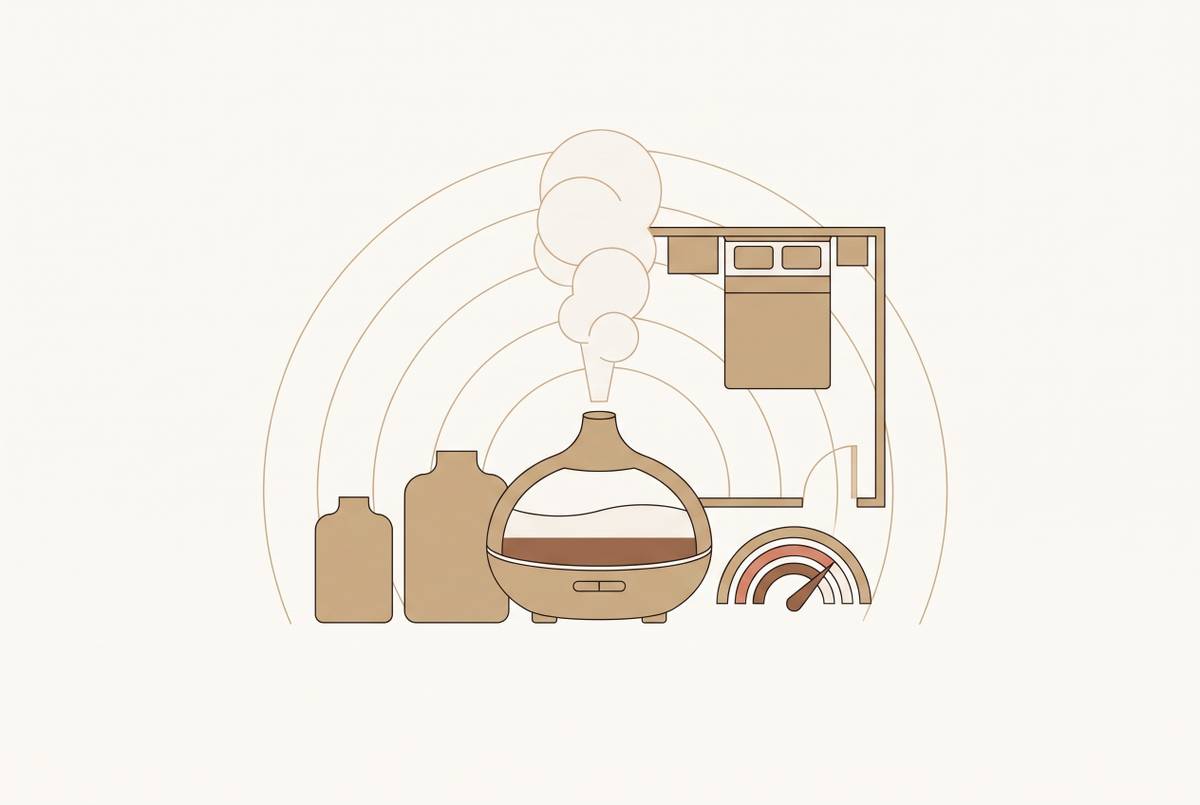
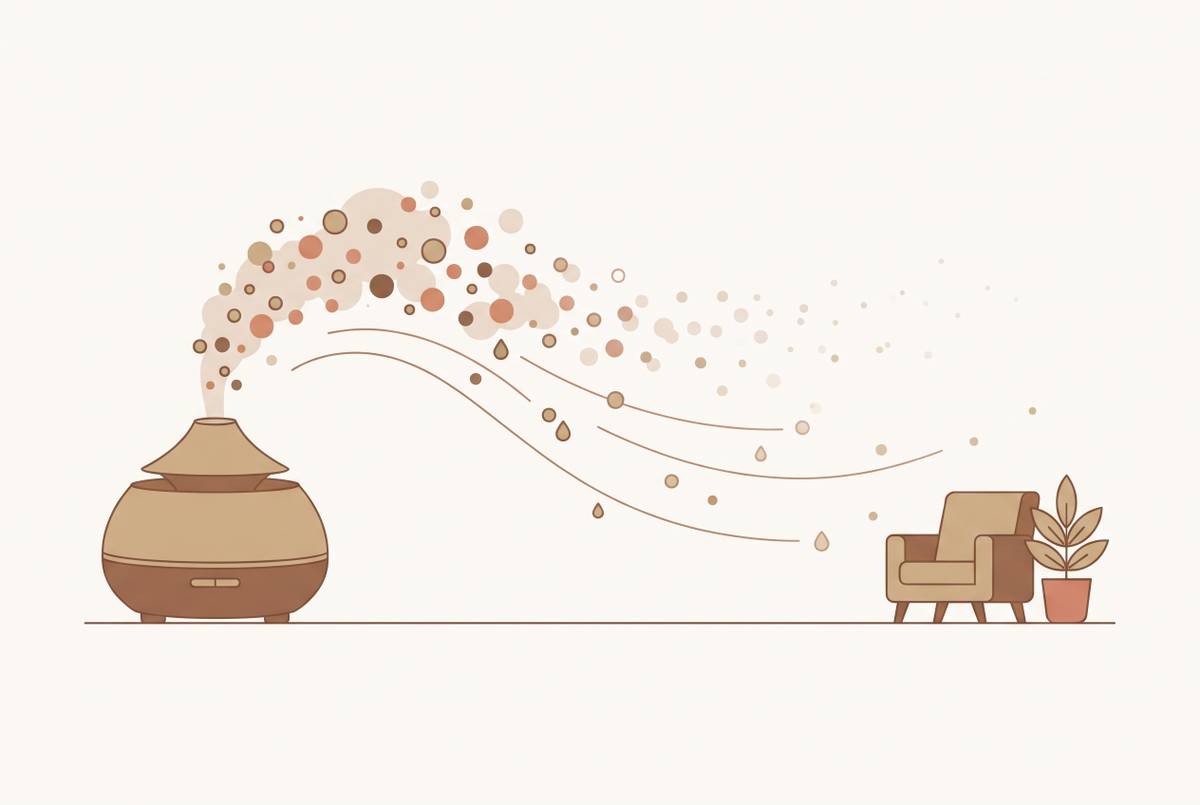
Water dilutes fragrance at the source while heavy droplets settle before traveling far.
Priya Subramaniam
Section
18 stories in Diffuser Technology.
Water dilutes fragrance at the source while heavy droplets settle before traveling far.
A 500–700 ml diffuser with adequate output covers the room better than coverage claims suggest.
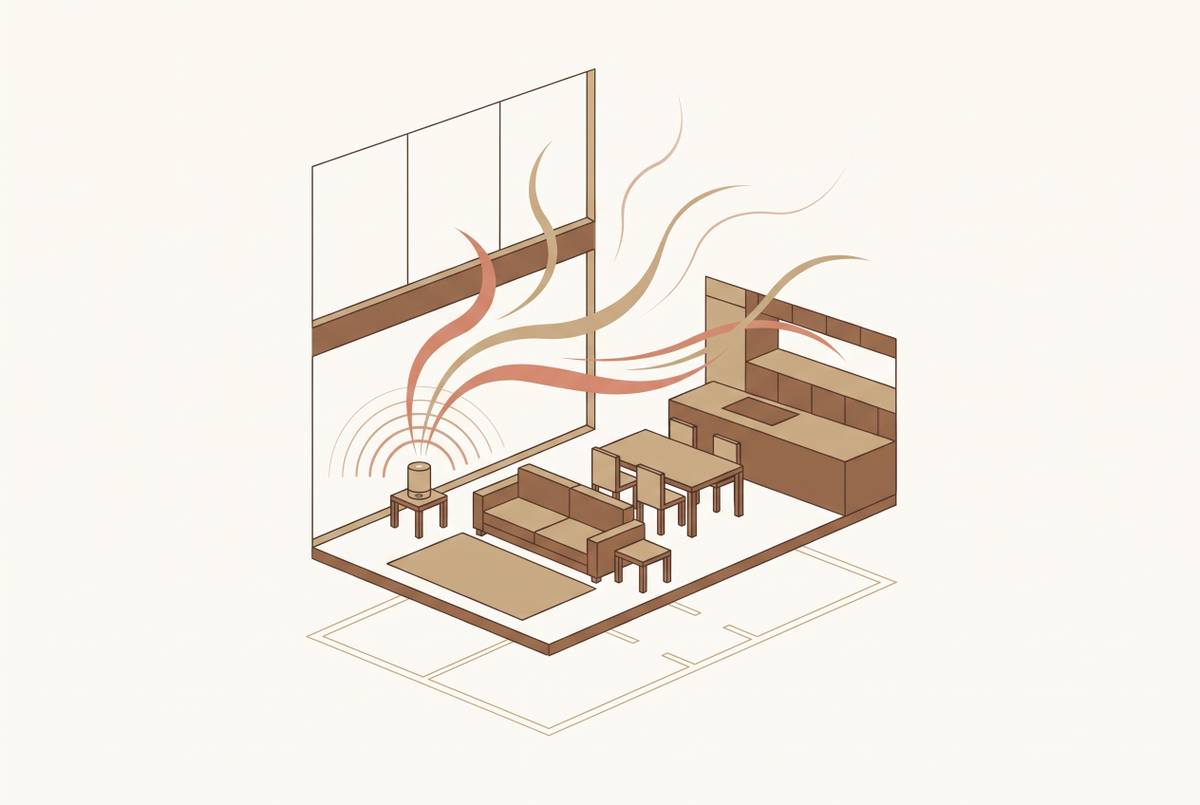
Ceiling height and airflow matter more than the square footage rating when sizing a diffuser.
Waterless diffusers cover large rooms better than ultrasonic models.
Continuous diffusion raises humidity, particles, and contaminants while scent fades.
Volume, airflow, and placement matter more than square footage alone.
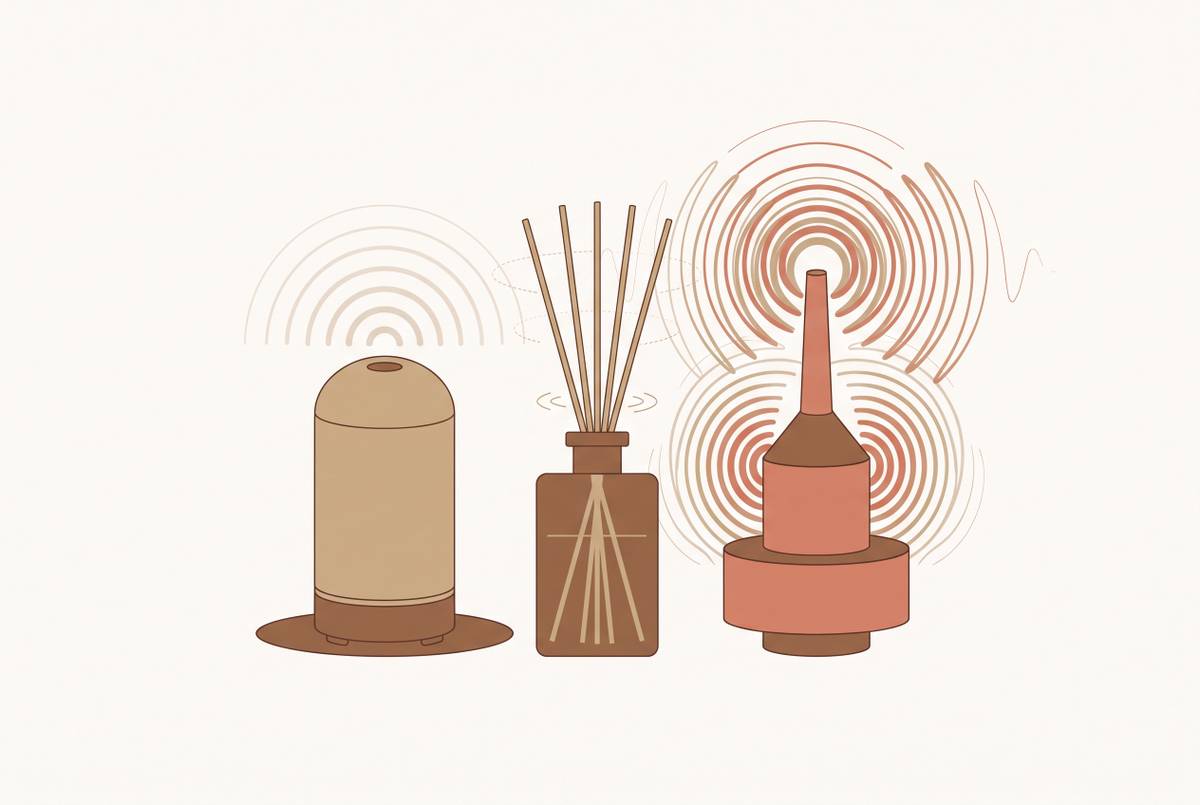
Ultrasonic models dominate the market, but noise profiles vary wildly between diffuser types.
Oil buildup kills performance faster than most owners realize.
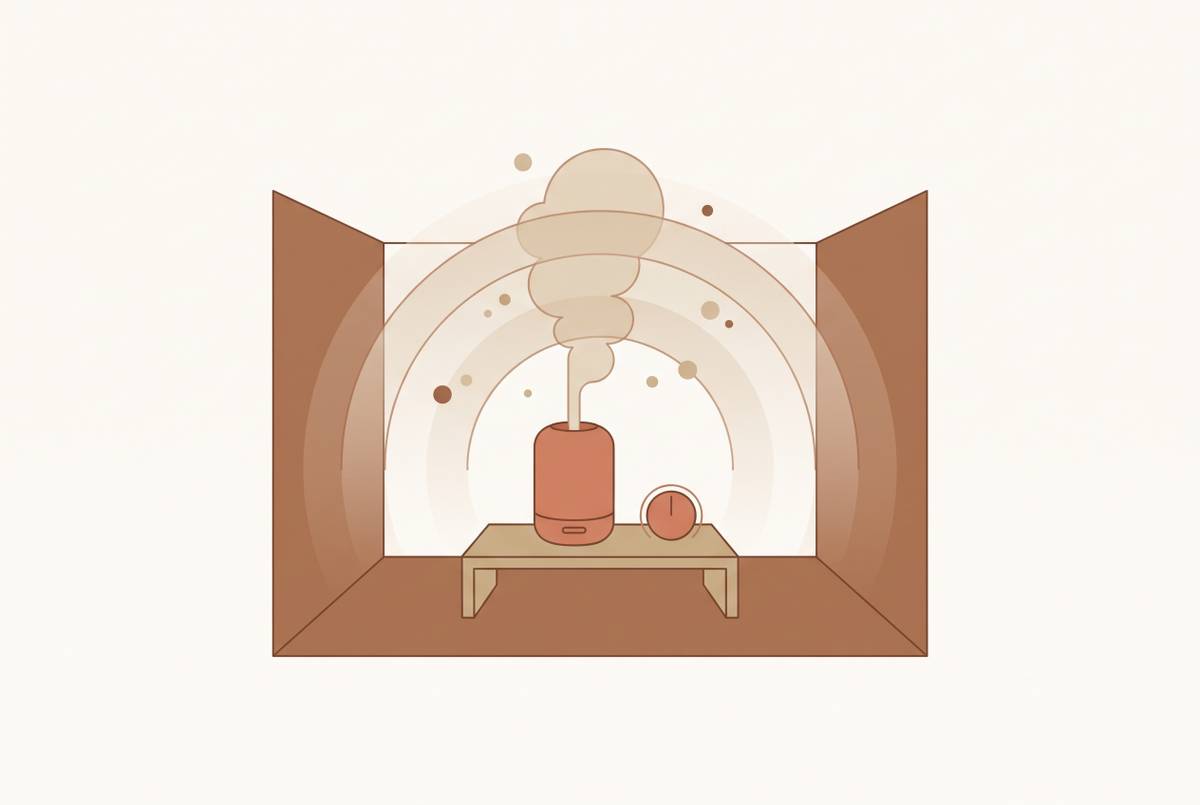
Ceiling height dramatically changes how much air your diffuser actually needs to fill.
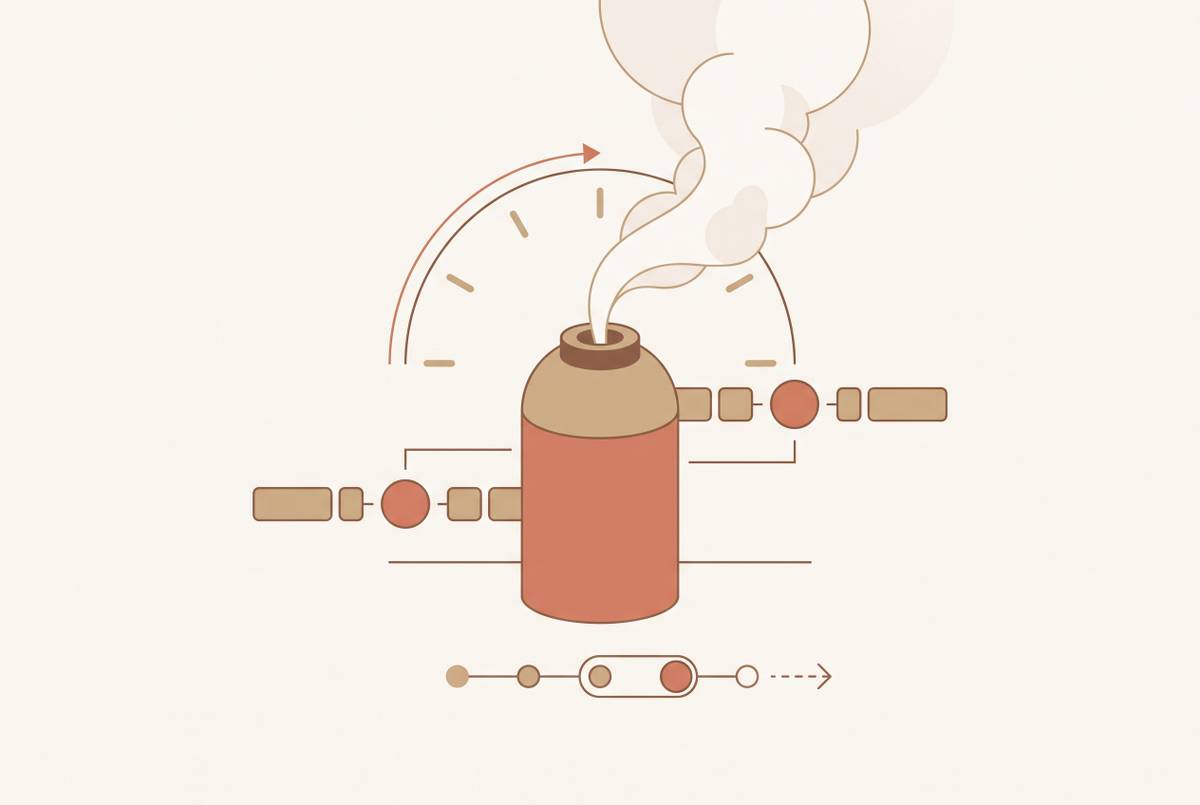
Cold-air diffusers with smart scheduling prevent nose-blindness while saving fragrance oil.
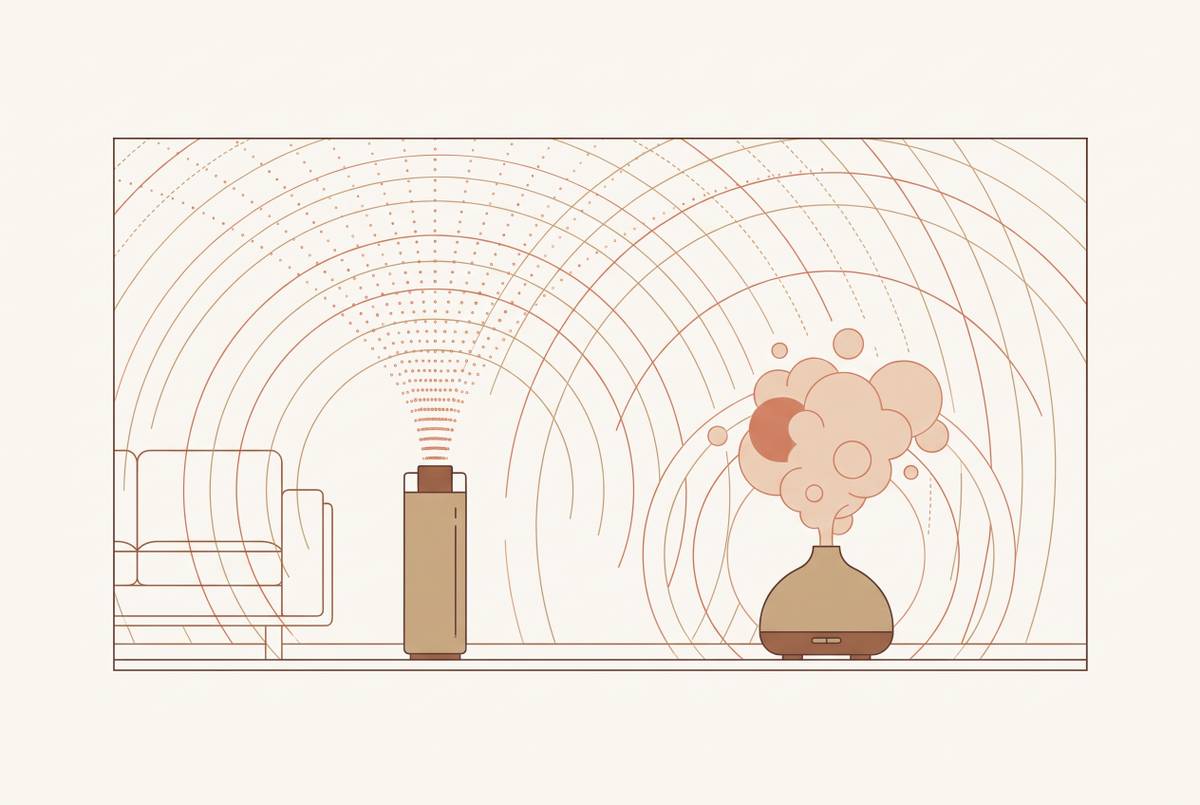
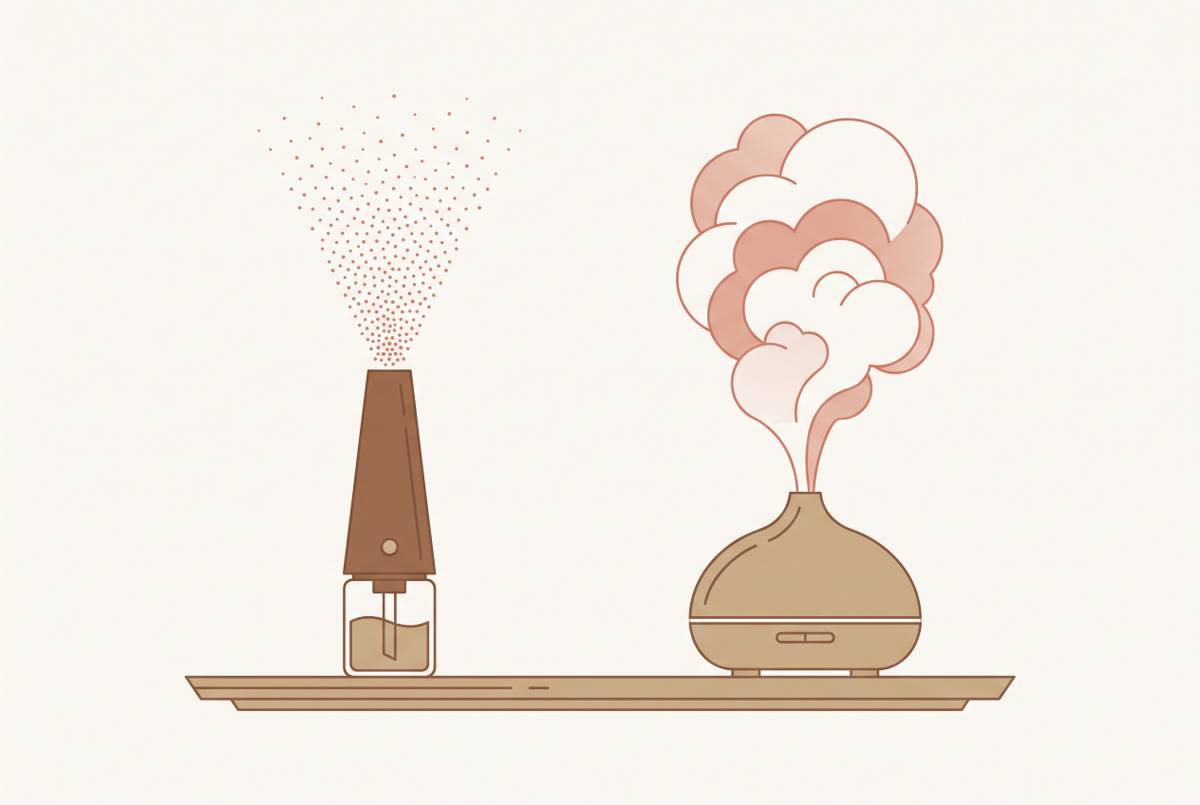
Cold-air diffusion uses pressurized air; ultrasonic uses water dilution.
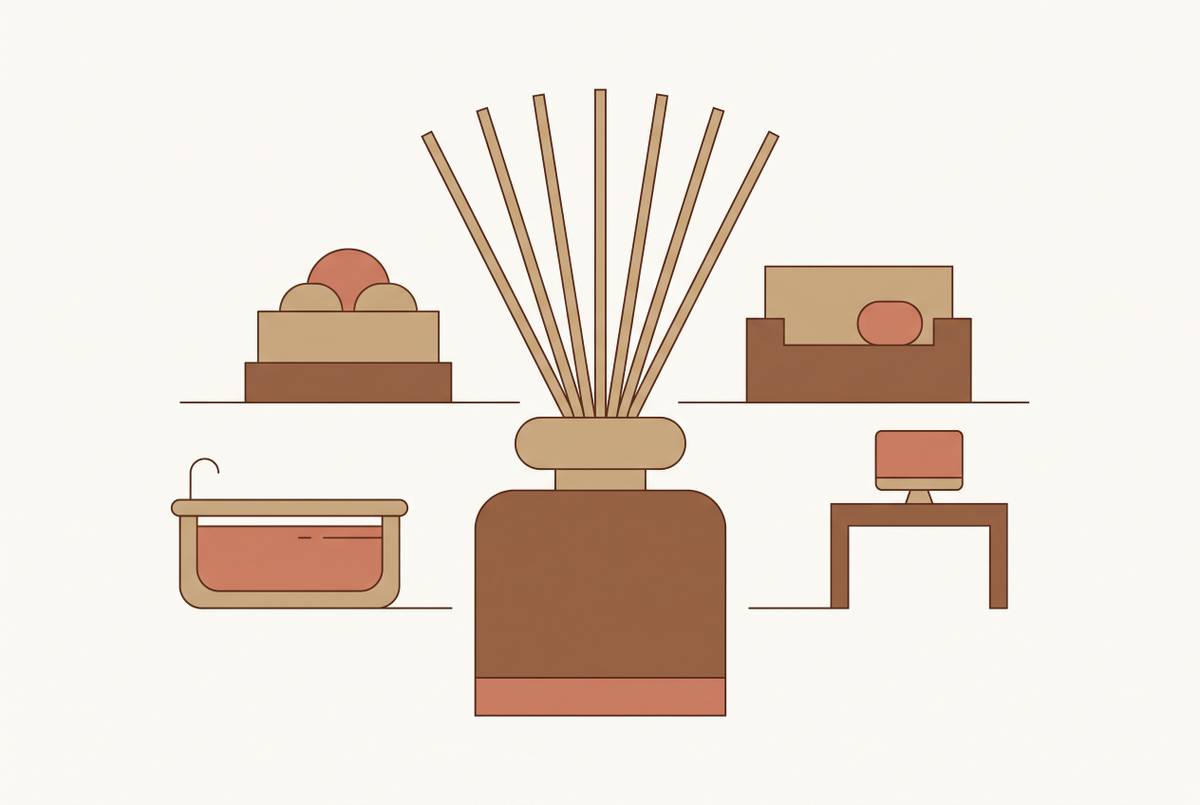
Match reed count to room size, not bottle capacity, for the right scent intensity.
Four variables control how long your reed diffuser actually lasts.
Scent reaches your brain before conscious thought and shifts mood measurably.
Programmable fragrance systems are replacing dumb diffusers as the smart home category expands.
Cold-air diffusers cover larger spaces with pure oil, while ultrasonics work best in single rooms.
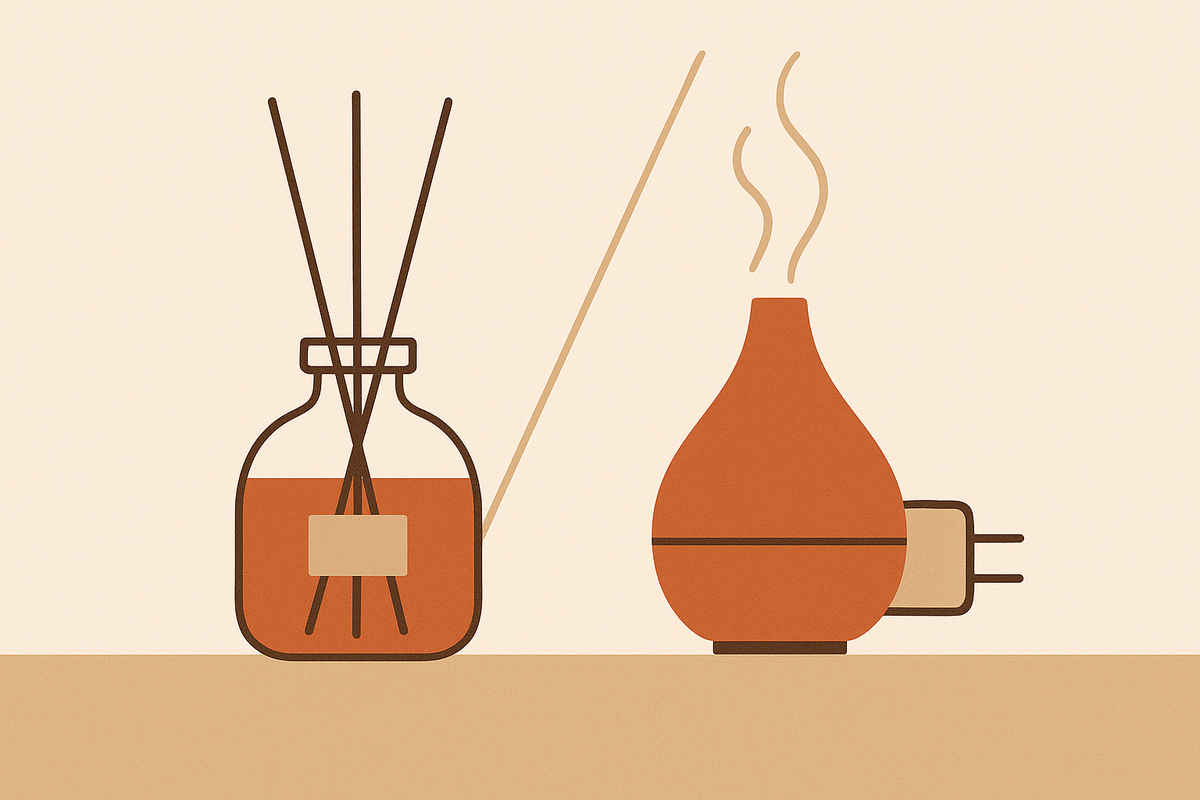
Electric diffusers give you control reed can't match, but require more upkeep.
These devices preserve fragrance intensity by skipping water and heat entirely.