Diffuser Placement for Bedroom Scent and Sleep Quality
Indirect room diffusion works better for sleep than scent placed close to your pillow.
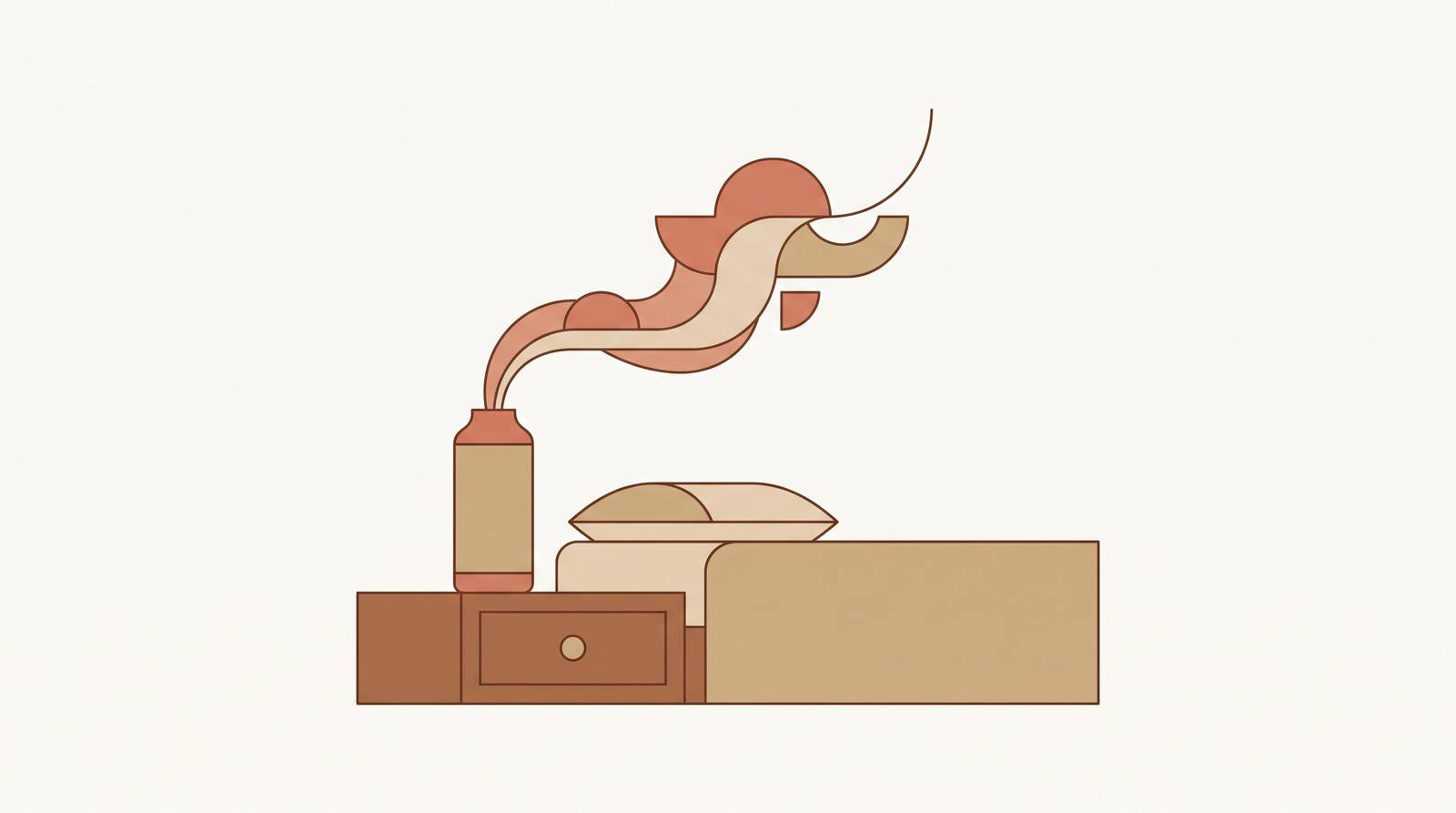
Here is something most people don't know about smell: it is the only one of the five senses that bypasses the thalamus entirely. Every other sensory signal, sound, sight, touch, taste, gets routed through that central relay station before the brain decides what to do with it. Olfactory molecules bind directly to receptors feeding straight into the limbic system, the part of the brain governing emotion, memory, and arousal.
That's not a minor anatomical footnote. It means a familiar scent can shift your physiological state faster than a conscious thought can form. The signal arrives before the brain has a chance to deliberate. I noticed this years ago, not in a lab, but in a perfumer's working room, watching someone react to a single strip of bergamot before she'd even named what she was smelling. Her shoulders dropped. Her breathing slowed. She hadn't decided to relax. Something else made that decision first.
This is why aromatherapy produces measurable sleep effects rather than warm placebo comfort. A 2026 systematic review and meta-analysis published in Holistic Nursing Practice pooled eleven randomized controlled trials and 628 adult participants, finding a standardized mean difference of negative 0.56 in favor of lavender for sleep quality. A 2024 review in Mini Reviews in Medicinal Chemistry identified chamomile, bergamot, and rosemary alongside lavender as the four essential oils with the most replicated sleep benefits. Bergamot specifically showed reduced cortisol and anxiety scores in a 2020 trial published in Complementary Therapies in Medicine.
What makes the olfactory pathway so distinctive is its implicit nature: it can shift physiological state without triggering behavioral arousal the way a sound or a touch would. You don't have to consciously register a scent for it to act. But the limbic pathway is sensitive. Overwhelm it with too much fragrance, and you stimulate rather than calm.
Concentration isn't a side consideration. It's the central variable, and concentration is almost entirely a placement and delivery question.
What a 2025 study found when it tested how scent is delivered during sleep
Most aromatherapy research tests whether scent works, not how it's delivered. A 2025 study published in Scientific Reports actually investigated the second question, comparing direct odor delivery like nasal clips and pillow application against indirect room-level diffusion.
131 healthy participants were recruited between June 2022 and September 2023; 112 selected both a scent and an application method, with a mean age of 31 years and a fairly even gender split. The key finding: using a diffuser to deliver odor was associated with better subjective sleep quality and reduced daytime fatigue. Indirect, room-level diffusion outperformed direct application.
That runs counter to intuition. More concentrated delivery, closer to the nose, produced worse outcomes. The moderate ambient environment was more effective. This kind of finding gets glossed over in wellness content because it complicates the sales pitch, but it's probably the most practically useful thing in the whole literature.
There was a second finding: no sustained improvement accumulated over repeated nights of odor exposure. The benefit was environmental and situational, not cumulative the way a medication builds in your system. The goal isn't to saturate a bedroom with fragrance night after night. The goal is to create the right condition on a given night.
What this implies for placement is concrete. The diffuser's job is to create an even, moderate scent environment across the room, not to concentrate fragrance at the pillow and not to run indefinitely. Indirect diffusion works precisely because it distributes scent without overwhelming the olfactory system. Placement that violates either condition works against the mechanism the study actually observed.
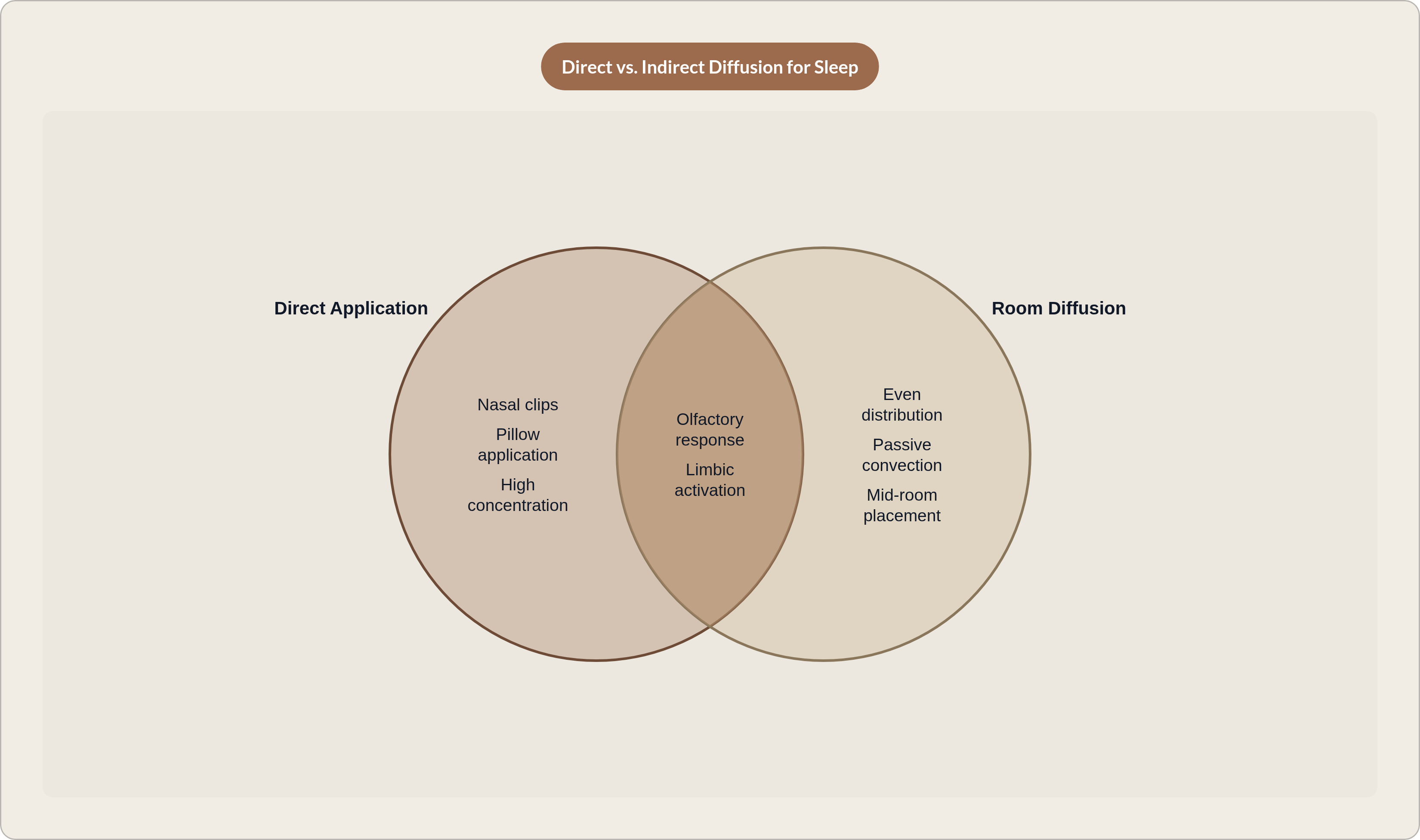
The three placement variables that determine whether bedroom diffusion actually works
Most people place a diffuser the way they'd position a decorative object: wherever it looks right, wherever there's room. On the nightstand, tucked into a corner, balanced on a windowsill. That instinct works fine in a living room during the day, where the space is larger, ventilation is active, and you're moving around. A bedroom at night is a categorically different environment: enclosed, static, low-airflow, with a motionless person breathing the same air for seven or eight consecutive hours. Same object, completely different physics.
Three variables determine whether placement actually serves the sleeper.
Distance from the bed
The consistent recommendation across sleep and fragrance specialists is three to six feet from the bed. Close enough for scent to reach the sleeper; far enough that concentration doesn't build directly over the breathing zone across the night.
The nightstand is the intuitive choice and the wrong one. It violates the distance rule and introduces practical problems, spilled water, mist near electronics, proximity to the sleeper's face, that compound over time. Too far in the opposite direction creates the inverse problem: scent dissipates before it reaches anyone.
Height and surface position
Fragrance molecules, particularly those from cold-air diffusion, benefit from a mid-room height. A dresser, a shelf, a raised side table. From that elevation, scent disperses downward and outward rather than pooling near the floor where air is most stagnant.
Floor-level placement is a consistent underperformer. It creates concentration gradients that compound uneven distribution: the air nearest the floor becomes more fragrance-dense while the breathing zone at mattress height gets less than intended.
Airflow and direction
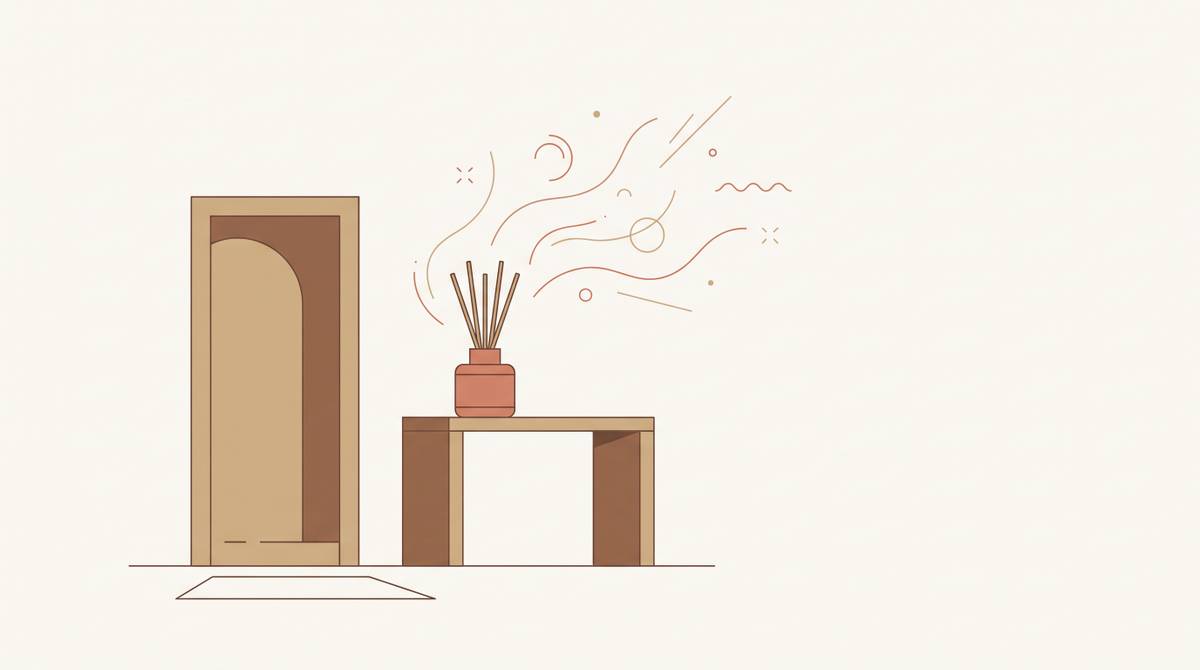
This is the variable most people overlook. Keep the diffuser away from ceiling fans, standing fans, and HVAC vents. Forced airflow either disperses fragrance too quickly, making it disappear before it registers, or pushes it unevenly into one corner of the room.
The goal is passive, natural convection: let scent settle into the room's ambient air without turbulence. Natural airflow is an asset. Forced circulation is not.
Timing the diffuser run so scent works with sleep onset rather than through the night
Run the diffuser for 20 to 45 minutes before sleep. Not continuously. Not all night.
The reasoning isn't complicated. Scent works best as a ritual anchor, a sensory cue that reliably precedes sleep onset and primes the limbic system for the transition. It functions like a signal, not a sustained intervention. A consistent sensory environment, same scent, same timing, same intensity, supports relaxation more dependably than a variable or on-all-night background. Bedtime rituals accrue meaning through repetition; the diffuser is no different.
Running a diffuser continuously through the night in a sealed bedroom does two counterproductive things. First, fragrance concentration builds beyond the moderate level the 2025 Scientific Reports study identified as effective, shifting from relaxing to stimulating. Second, added humidity and airborne particles accumulate in an already-enclosed space across many hours, creating air quality problems I'll get to shortly.
For anyone who wants some scent available deeper into the night, an interval timer cycling on for twenty minutes and off for forty is a better solution than continuous operation. Most quality diffusers offer this. It maintains the environmental effect without the accumulation problem.
Output level matters as much as run time. A high-mist setting in a small, sealed bedroom will overshoot the target concentration quickly. Low output, shorter cycles, consistent timing: those are the three levers.
Why bedroom air quality sets the ceiling for how well any diffuser placement will perform
A 2025 study published in Science and Technology for the Built Environment, conducted under ASHRAE research project 1837-RP, found that minimum prescribed residential ventilation rates are insufficient for bedrooms. CO₂ generated by a sleeping occupant can exceed 1,000 parts per million, a threshold the research links to disrupted sleep.
That finding matters for diffuser placement in a specific way. A fully sealed bedroom is already a compromised air environment before a diffuser is introduced. Adding fragrance molecules to stale, CO₂-elevated air degrades both overall air quality and scent clarity; the olfactory system reads a muddled environment differently than a clean one. Fragrance performs better in fresher air. That's a more practical argument for cracking a window than most people think to make.
The adjustment is simple: ventilate the room before bed, or run the diffuser while the room is still getting fresh air, then close up once the air has been refreshed. Both goals resolve simultaneously.
One complication is worth understanding. Terpenes, the aromatic compounds prominent in citrus and pine essential oils, can react with ozone entering through open windows or ductwork to form secondary compounds including formaldehyde. This is most relevant in urban environments during summer months when outdoor ozone concentrations peak. The solution isn't to avoid ventilation, which trades one problem for another. It's to choose fragrance types thoughtfully relative to your local environment and keep diffuser output moderate.
What's actually in conventional air fresheners and why it matters more in a room where you sleep for hours
The bedroom is the highest-stakes room in the house for fragrance ingredient quality. You spend more consecutive hours breathing bedroom air than any other room's air, roughly a third of your life, which means what you diffuse there is what you inhale at low concentration for a long time.
Conventional air fresheners and plug-in scent devices can emit volatile organic compounds including benzene, formaldehyde, phthalates, toluene, and acetaldehyde, substances classified as endocrine disruptors and carcinogens. A 2007 study examining 74 air freshening products detected more than 350 distinct chemicals and allergens in post-use air. Product formulations have evolved since, but that study established a baseline concern that subsequent clean-fragrance standards have been built against.
U.S. labeling law permits more than 3,500 different chemicals to appear on a label under the single word "fragrance." That's not a transparency standard; it's an absence of one. In a living room for two hours on an afternoon, the concern is modest. In a sealed bedroom over eight hours, the cumulative exposure picture changes materially. Duration is the thing most people fail to account for.
Essential oils aren't automatically exempt. They emit terpenes, which at high concentrations can be irritating for people with sensitivities and harmful to pets, and which carry the ozone-reaction risk already described. A healthy adult using an ultrasonic diffuser at a few drops of oil for 30 to 60 minutes in a ventilated room produces VOC concentrations well below occupational exposure limits. The risk profile is manageable, but it requires the right product and the right timing.
The useful question before any bedroom diffuser purchase: what exactly is this device dispersing, and is that substance appropriate for hours of inhalation at low concentration?
Why cold-air diffusion changes the placement calculus compared to ultrasonic or heat-based options
Not all diffusers work the same way, and the differences aren't cosmetic. They directly affect placement strategy.
Heat-based diffusers and candles alter fragrance chemistry during dispersal. Thermal breakdown changes the aromatic profile and can produce combustion byproducts that compound whatever air quality challenges the bedroom already presents. You're getting a modified version of the scent, with additions the formulator never intended.
Ultrasonic diffusers, the most common type on the market, work by vibrating water at high frequency to create a fine mist. They're effective and widely available, but they add humidity to a sealed sleep environment across hours of operation, which affects both perceived air quality and the diffuser's own long-term performance.
Cold-air diffusion uses pressurized air, not heat and not water, to atomize fragrance oil into ultra-fine dry particles. Those particles stay suspended longer and travel farther through a room than mist does. Because the process involves no thermal conversion, the aromatic compounds arrive essentially as the perfumer formulated them. Because there's no water involved, no humidity is added to the sleep environment.
For bedroom placement specifically, the dry-particle suspension characteristic means more even distribution from a single mid-room position. You're less dependent on fans or forced circulation to move scent toward the bed, which reinforces the passive-airflow placement strategy described earlier. The physics of the diffusion type and the physics of the room work in the same direction.
Some cold-air diffusers include interval and intensity controls as standard features. Those controls map onto the 20 to 45 minute pre-sleep run and low-output approach the evidence supports. Fragrance oils formulated without the VOC-generating ingredient categories that make conventional air fresheners a concern are the better choice for high-exposure sleep environments.
Choosing a sleep scent and building a placement setup that becomes a nightly ritual
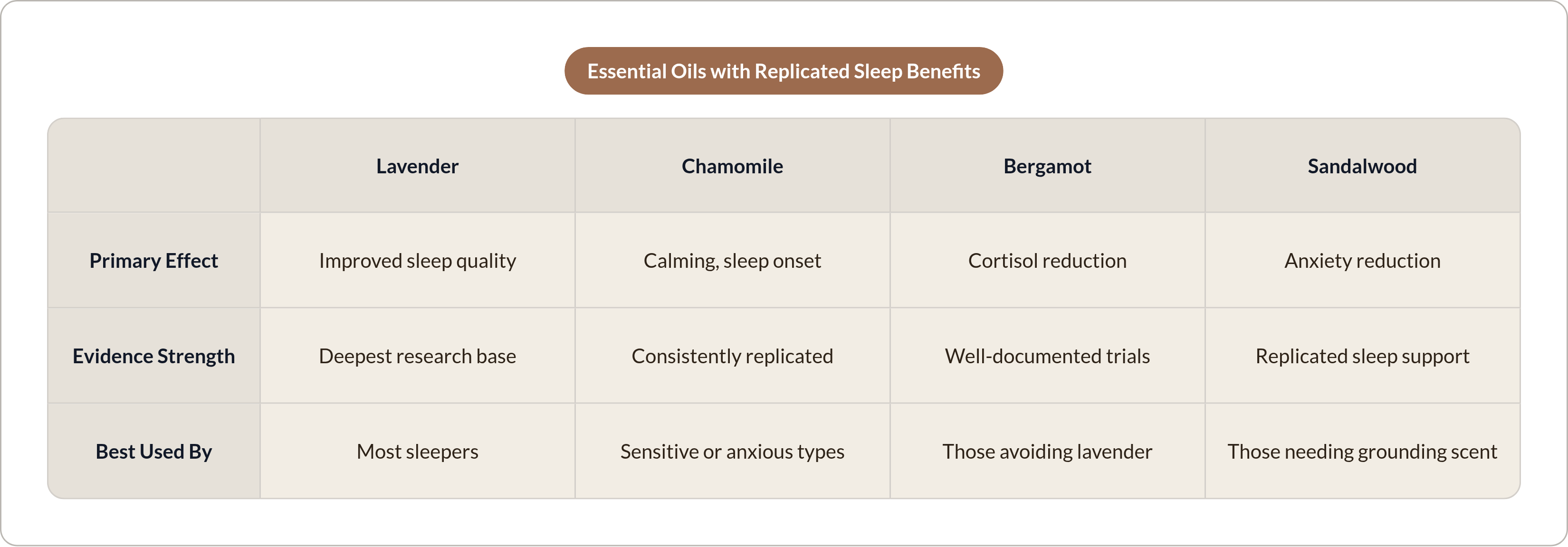
Placement is half the equation. The scent itself needs to match the goal.
Lavender, chamomile, bergamot, and sandalwood have the strongest and most replicated evidence base for sleep support and anxiety reduction. Lavender has the deepest body of research. Bergamot is the more interesting option for people who find lavender too loaded with prior associations, whether that's a particular lotion or a grandparent's linen closet; its cortisol-lowering profile is well documented, and its scent profile is distinctive enough to function as a strong associative anchor precisely because it hasn't already been claimed by something else in your memory.
Consistency across nights matters more than most people expect. The olfactory system builds associative memory. The same scent in the same context at the same time strengthens its cue value through repetition alone. A fragrance used exclusively for sleep can gradually become a more effective sleep signal, not because its chemistry changes, but because the brain keeps filing evidence that this smell precedes rest. The scent's pharmacological effect and its ritual function reinforce each other over time. That feedback loop is the actual goal.
A practical bedroom setup: diffuser on a dresser or shelf three to six feet from the bed, raised off the floor, positioned away from fans and vents. Run it for 20 to 45 minutes before sleep, output on low. Turn it off or set it to interval cycling before the room is sealed for the night. Ventilate briefly before closing up. Choose a scent with documented sleep-support properties and use it consistently, and only, in this context.
The olfactory pathway to the sleeping brain doesn't need to be activated or unlocked. It's already there, running, ready. The only real question is whether you're sending it a coherent signal or a cluttered one.