Diffuser TechnologyLong read
Smart Home Scent Diffusers and App-Controlled Fragrance Systems
Smart diffusers deliver scheduled scent on a schedule, not just on-off switches wearing app labels.
Staff Writer · · 13 min read
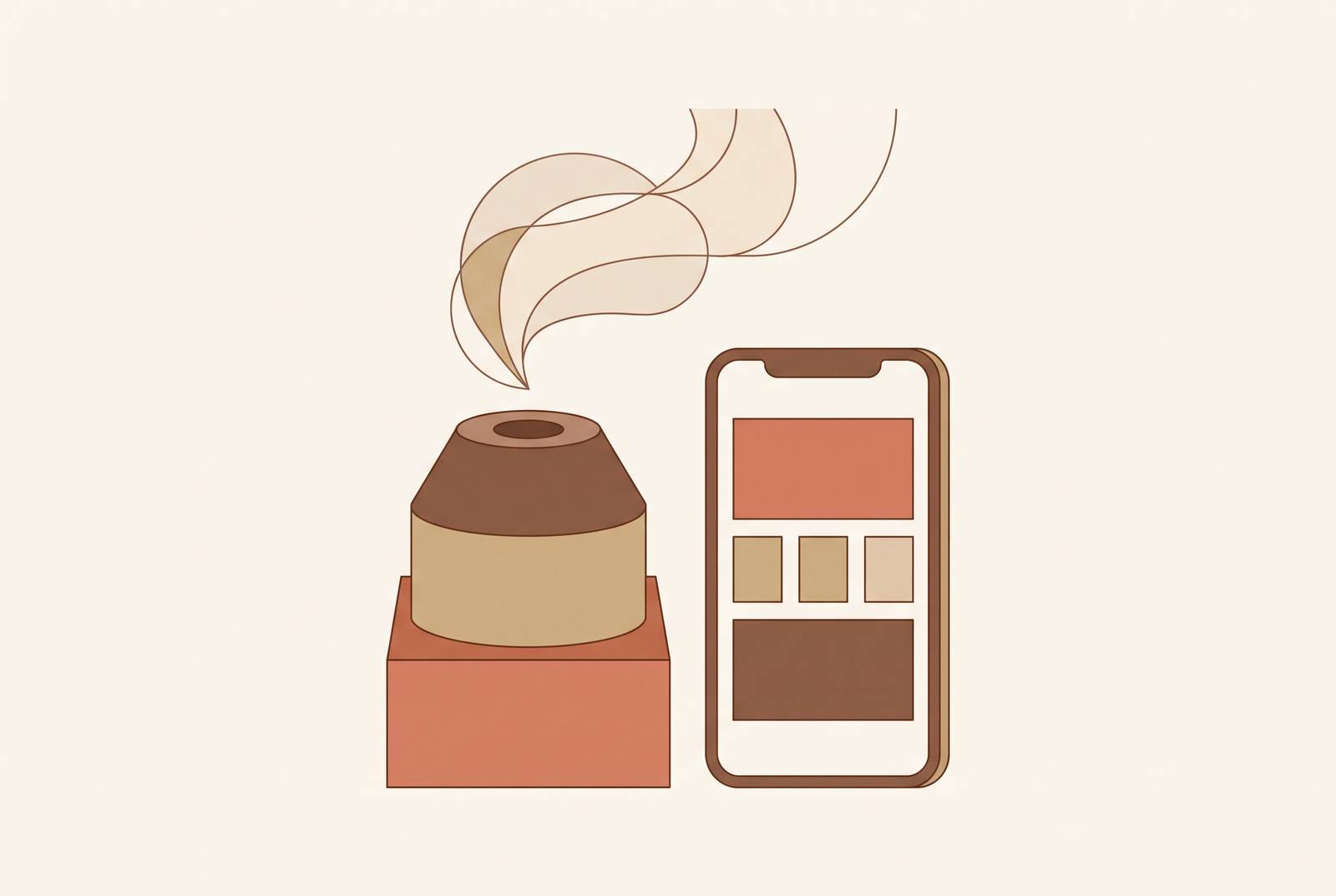
The smart home market hit roughly $116.8 billion in 2025, and buried in that number is a category most people haven't clocked yet: fragrance. Home scent alone is now a $13.2 billion market, headed toward $26.5 billion by 2033. The phone that dims the lights and locks the door now decides when the living room smells like cedar and citrus, and most of what gets sold as "smart" in this category doesn't earn the word.

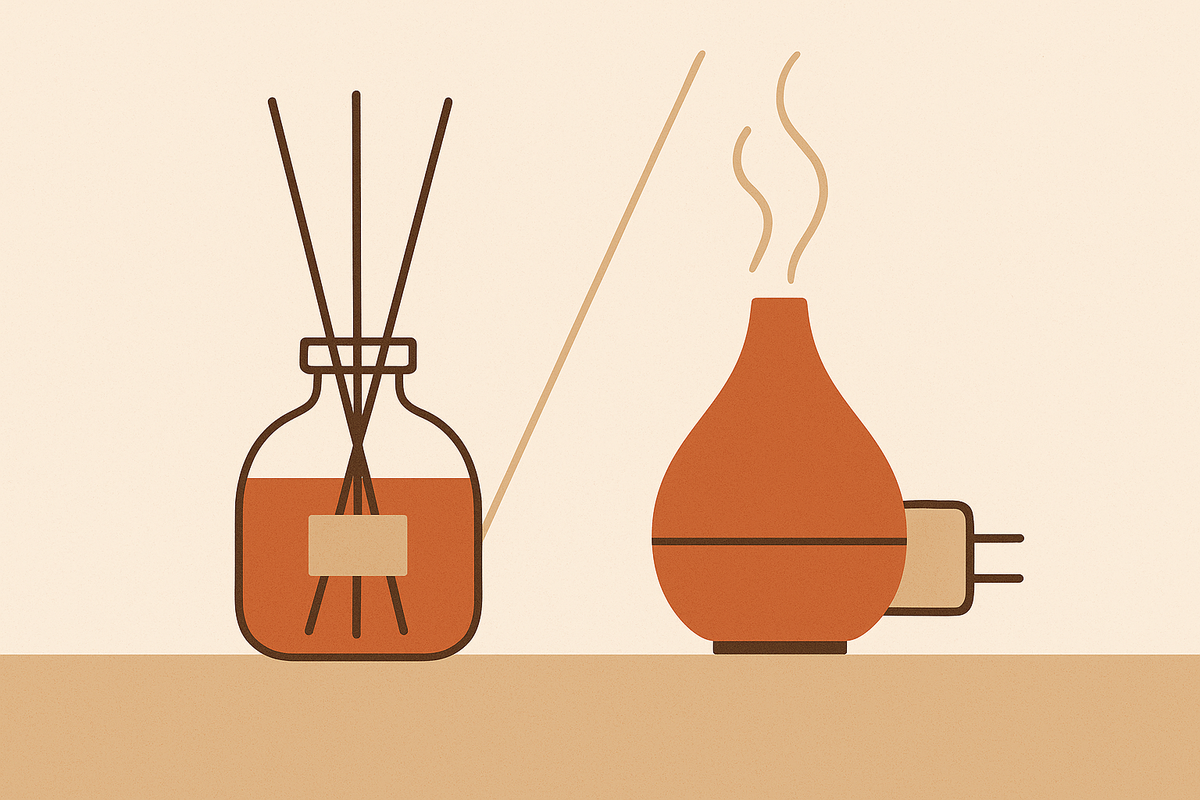
Lighting automated first, then thermostats, then locks, cameras, speakers. Fragrance is just the next sense pulled into the ecosystem, as people move from passive scent (a candle burning unattended on a shelf, a reed diffuser nobody remembers buying) toward something scheduled and intentional. So what does an app actually give someone that a plug-in diffuser from a decade ago couldn't? It's worth unpacking layer by layer, because most of the buttons on these things exist to be ignored.

## What separates a smart diffuser from a connected one in name only

Start with the baseline. A genuinely smart diffuser lets someone control it remotely, adjust output, and set specific run times from a phone. That's the floor, not the ceiling. Higher up the price ladder, devices talk to Alexa or Google Home, adjust output based on room temperature, alternate between two scents on a schedule, or claim some flavor of AI personalization that learns preferences over time.

A cheaper, more common category exists too: a plastic box with a Wi-Fi chip that turns on and off from an app. It offers no scheduling, no intensity steps, no way to check whether it's actually running while someone stands in a grocery store wondering if they left it on. Most of what gets marketed as "smart" here is this second kind wearing better packaging, and the buyer is the one paying a premium for the illusion. The on/off box with an app icon amounts to a remote-controlled outlet that happens to smell nice, and pricing it like a genuine smart diffuser is where most of this category earns its skepticism.

Four questions separate the two before anything goes in a cart. Can someone schedule specific windows by time of day, and can they step intensity up or down instead of just flipping a switch? Does the app show real-time status when nobody's home, and does it talk to the rest of a smart home setup, or sit in its own silo? A device that fails two of these has borrowed the name, and borrowing the name is the whole business model for a chunk of this market.

## How cold-air diffusion changes what app control can actually deliver

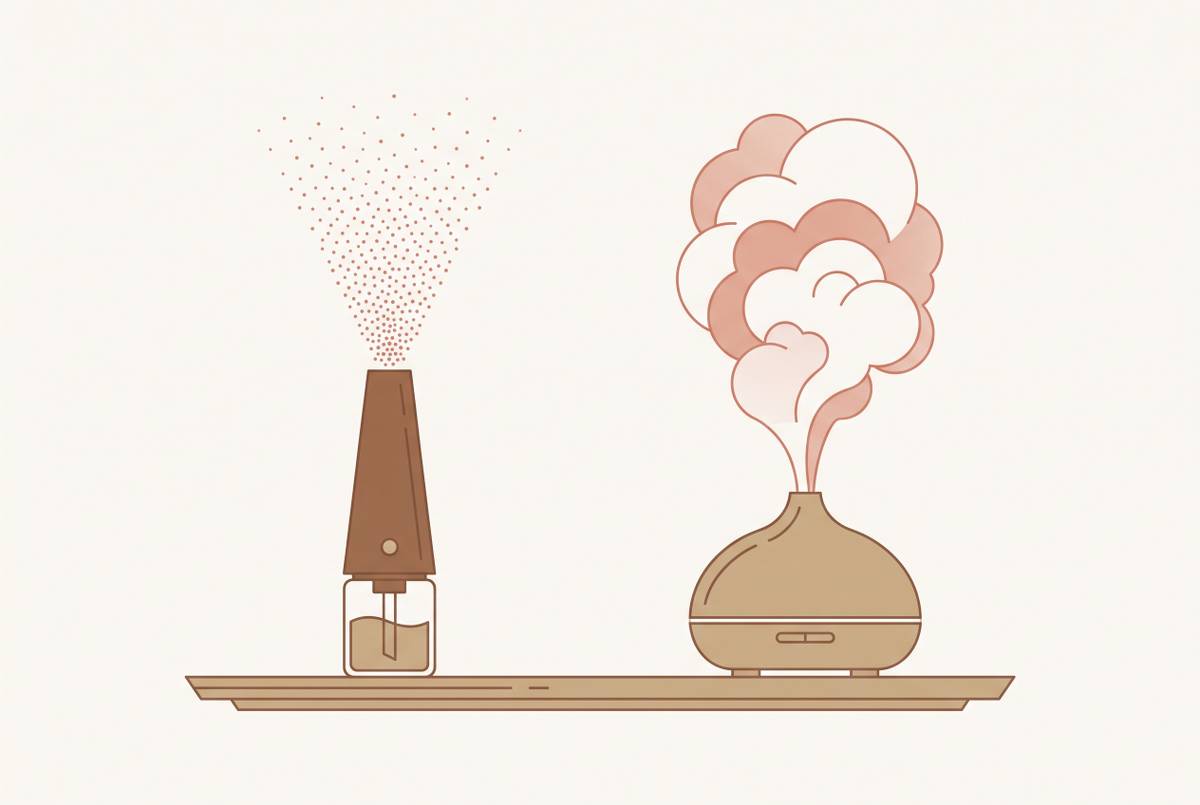
Here's where mechanism starts to matter more than marketing. Cold-air diffusion breaks fragrance oil into extremely fine particles using air pressure alone (no heat, no water, no flame), and that distinction decides whether an app-scheduled scent burst actually smells like what the bottle promised. Most shoppers never get told to ask about it, and that's the real gap in this market.

Heat degrades fragrance compounds. Run a scheduled burst through a device with a heating element, and the app does its job perfectly while the chemistry does something else entirely. The scent that comes out has drifted from the scent that went in. Ultrasonic and water-based diffusers fail differently: they dilute the oil and dump moisture into the air alongside it, so even a perfectly timed schedule delivers a weaker, dampened version of the intended fragrance. Cold-air nebulizing sidesteps both problems and keeps the oil's original character intact, so when the app dials intensity up or down, it's moving a consistent scent through a range instead of degrading a different one at each setting.

Coverage is where this actually shows up in the room. Cold-air units cover substantially more square footage than a typical ultrasonic device, a candle, or a reed diffuser, so the scheduling precision the app offers operates at a scale where it actually matters. No water also means no added humidity, which counts for anyone with hardwood floors, electronics, artwork, or a piano they'd rather not warp. It also removes the standing-water environment where bacteria and mold set up shop in traditional diffusers, which is less a feature than a maintenance headache quietly avoided.

Name the thing directly: the room-filling scent signature people associate with five-star hotel lobbies comes from professional cold-air diffusion equipment, and smart home devices are now putting a version of that mechanism on a nightstand. Ultrasonic diffusers still dominate by sheer unit volume, so most shoppers never think to ask which delivery method they're buying. Asking about mechanism instead of brand is the single best question a buyer currently isn't asking, and it's the one the marketing copy is least interested in answering.

## Scheduling, intensity, and scent-switching: what each control layer actually does

Scheduling is the most underrated feature in the category, and it's not close. Run the diffuser during the window someone actually walks through the door, during dinner, during the hour before bed, and leave it off the rest of the day. That single choice cuts oil use without cutting how strong the scent feels, because the fragrance shows up exactly when someone's nose is available to register it. There's a biological reason for this: noses stop registering continuous smells within minutes, so an always-on diffuser fights a losing battle against its own consistency. Timed intervals reset the sense each time, keeping the scent noticeable instead of letting it fade into background noise nobody clocks anymore.

Intensity control is a separate lever, and it governs more than volume. A cramped bathroom needs a low setting or the scent turns overwhelming fast; a great room with a vaulted ceiling needs sustained higher output. The instinct that more fragrance equals more atmosphere works against itself almost every time. Saturation is the fastest way to make a nice scent unbearable, and a well-calibrated intensity creates presence without tipping into it.

Scent-switching barely existed five years ago and is now showing up as a premium differentiator, a shift that brands like Aura House, a diffuser and clean-oil company aimed at design-forward homes, have built their line around. Some newer systems, such as the Moodo AI Scent Box, blend up to four scents in real time, shifting the mix based on settings chosen through the app. Others run two fragrance vials on an alternating schedule, a single vial typically lasting around three weeks at medium settings in a medium-sized room, with alternating use roughly doubling combined runtime. That opens up a morning-scent, evening-scent logic a manual diffuser simply can't execute.

Remote access rounds this out, and its value is logistical, not glamorous: turning the diffuser on before walking through the door, or checking status from a parking lot because there's a dog at home and the thing has been running unsupervised for six hours. These are small conveniences that add up anyway.

## How room size, layout, and placement interact with smart settings

None of the scheduling or intensity precision above means much if the device sits in the wrong spot. App control can't fix bad placement, and this is the section most buyers skip on their way to the feature list, which is exactly backwards. Placement decides whether any of the other settings matter at all.

Manufacturer coverage numbers, some claiming up to 1,000 square feet, assume ideal conditions: open floor plan, moderate ceiling height, decent airflow. Real homes rarely cooperate. Doorways, partitions, thick curtains, and high ceilings all eat into effective range, so a room that measures small on paper might still need a higher intensity setting or a second unit to actually feel scented.

Placement has its own rules, and most of them get ignored. Diffusers positioned at mid-height or slightly elevated let particles settle and circulate the way gravity intends. Tuck one into a dead corner, inside a cabinet, or behind a couch, and even a maxed-out intensity setting won't compensate, because the fragrance is fighting furniture before it fights the room. Put one near an HVAC vent or an open window, and the scent gets carried straight out of the space it was meant for; no scheduling algorithm fixes a diffuser that's accidentally perfuming the neighbor's yard.

Whole-home systems handle this at a different scale. HVAC-integrated cold-air diffusers, built into ductwork rather than sitting on a shelf, handle multi-room coverage from a single point. App control at that scale manages zones and intensity across an entire floor plan instead of customizing one room, a better fit for someone who wants one consistent scent signature through the house instead of a lavender bedroom next to a citrus kitchen.

For everyone else, sizing is mostly common sense once it's said out loud. Bedrooms want a compact device, low intensity, short scheduled windows. Living rooms and open-plan spaces want higher coverage, mid-to-high intensity, and longer run windows tied to when people are actually home. Entryways need almost nothing beyond a short burst timed to arrival, since a first impression doesn't require hours of sustained output.

## The fragrance oil and cartridge question: proprietary systems vs. open compatibility

Two business models dominate this category, and open compatibility is the one worth choosing in almost every case. Proprietary systems build hardware that only accepts the brand's own fragrance pods or vials, full stop. Open-compatibility systems accept standard fragrance oils or essential oils from whatever source the owner prefers, no lock-in.

The proprietary route has real trade-offs, and the pitch is stronger than the reality. Branded vials commonly run $16 to $20-plus each, lasting around three weeks at medium intensity, a predictable but recurring cost that adds up over a year. Some hypoallergenic capsule systems last up to 60 days on hardware priced well above $250, so the higher upfront cost gets offset over time by less frequent reordering, and certain proprietary designs use genuinely advanced atomization, with Aera's Microdroplet Technology, for example, converting fragrance into droplets 50 times smaller than standard aerosol output. That's a real technical edge, and it's part of why some buyers accept the closed ecosystem willingly. The risk sitting underneath all of it doesn't go away, though: if the brand discontinues a scent or quietly reformulates it, there's no alternative supplier to turn to. The buyer is locked into whatever the company decides to keep making, on that company's schedule, indefinitely.

Open-compatibility systems trade a little convenience for actual freedom. Choose oils based on ingredient transparency, clean formulation standards, or plain personal preference, independent of what one company happens to be selling this quarter. That also makes it easier to hold out for phthalate-free, paraben-free, vegan, or cruelty-free formulations instead of settling for whatever sits in a proprietary catalog, and running costs tend to land lower over the long haul.

Whatever oil goes into a cold-air diffuser, three things are worth checking before buying a bottle. Viscosity matters, since nebulizing needs oils within a fairly specific thickness range; oils too heavy or too diluted with carrier won't atomize cleanly. Ingredient disclosure matters too, since the fragrance industry isn't uniformly required to list every component on a label, so brands that publish full ingredient lists deserve a real edge in the decision. Safety around kids and pets matters as well, especially in households where a diffuser runs unattended for hours. Subscription models split the difference: cartridges arrive monthly based on preferences set through the app, solving the reordering hassle without opening up real ingredient choice. It's still a closed system, just a more convenient one.

## Clean formulations and why the oil matters as much as the diffusion method

People spend around 90% of their time indoors, according to EPA data, and indoor air can carry pollutant levels two to five times higher than outdoor air, with VOC concentrations sometimes reaching ten times outdoor levels. That's the backdrop against which "what's actually in the bottle" stops being a boutique concern and turns into a basic air quality question.

Conventional air fresheners are a documented source of indoor VOCs and SVOCs, including benzene, formaldehyde, and toluene, along with phthalates used as fragrance fixatives. Formaldehyde is a known carcinogen and has turned up at elevated levels in some of these products. Phthalates specifically have been linked in research to reproductive system effects, fertility concerns, and a suspected bump in cancer risk, which is exactly why "phthalate-free" went from niche label to genuine purchase driver over the past several years.

It's worth sitting with this: "naturally derived" on a label doesn't automatically mean safer. A completely natural oil, delivered through a mechanism that degrades or dilutes it unpredictably, can behave very differently than the same oil delivered cleanly. Delivery method and ingredient transparency work together to decide actual exposure; neither one alone tells the whole story.

A genuinely clean formulation is a checklist, not a sticker on a bottle: full ingredient disclosure, not vague "free-from" claims with nothing behind them, no phthalates, parabens, or synthetic fixatives tied to the health concerns above, vegan and cruelty-free claims that are actually verified rather than assumed, and a formulation built specifically for diffusion, since concentration ratios and carrier oils differ across sprays, candles, and nebulizing devices, and a formula built for one doesn't necessarily perform in another. The clean fragrance market, valued at $13.64 billion in 2025 with a projected climb to $33.40 billion by 2035, according to Meta Tech Insights, suggests people are already voting with their wallets on this question.

Put the two threads together and the ideal setup is obvious: a cold-air, waterless diffuser running clean, fully disclosed fragrance oil. That combination knocks out heat degradation, added humidity, mold risk, and unnecessary chemical load all at once.

## How scent scheduling connects to mood, routine, and the neuroscience of smell

Smell has a shorter, more direct route to the brain's emotional centers than any other sense. Sight, sound, and touch pass through the thalamus first; smell skips that relay and connects more directly to the limbic system, the seat of memory and emotion. A 2026 perspective published in PMC goes further, arguing that smell and emotion are close to the same thing functionally, inherently emotional in nature rather than merely linked by association.

That has a practical consequence for anyone scheduling scent through an app. Deploy the same fragrance at the same time, in the same context, day after day, and the scent starts to function as a signal rather than a backdrop. It becomes the thing that tells the nervous system it's time to focus, or wind down, or that guests have arrived and the house is ready for them.

That principle translates into fairly simple scheduling choices. A citrus or energizing blend timed to the moment someone walks into the kitchen in the morning. A woodier, grounding scent triggered during the evening wind-down window, with the app cutting it off before bedtime rather than running all night. A short, high-intensity burst in the entryway right before guests arrive, automated so nobody has to remember to spritz anything on the way to the door.

None of this makes a diffuser a medical device, and it shouldn't be sold as one. But a 2025 meta-analysis of 33 randomized controlled trials found that aromatherapy meaningfully reduced anxiety in study participants, which supports a reasonable case that intentional, scheduled scent exposure does more for mood and routine than fragrance that just happens in the background. Scheduling turns "nice smell" into a repeatable ritual, and that repeatability is the entire reason to put a diffuser on an app in the first place.

## What to look for when choosing a smart diffuser for your home

The decision comes down to matching mechanism, control, and oil quality to how a specific room actually gets used. Everything above collapses into four real questions worth asking before buying anything, and if the answer to the first one is heat or water, the rest barely matter.

Does it use cold-air nebulizing, or does it rely on heat or water? That single answer determines whether scheduling precision delivers a consistent scent or a degraded, diluted one. Can the app schedule specific windows and step intensity up or down, or is its range limited to an on/off switch wearing a Wi-Fi badge? Is the fragrance system proprietary or open, and does that trade-off match how much someone actually cares about ingredient transparency versus convenience? And does the coverage rating on the box roughly match the real room, accounting for doorways, ceiling height, and furniture, rather than the idealized open floor plan used in marketing photos?

Get those four right, and everything else (the voice assistant integrations, the mood-based AI blending, the smart-home tie-ins) becomes personal preference rather than a make-or-break decision. The technology underneath a five-star hotel lobby scent is sitting on nightstands now, controllable from a phone three rooms away. Whether that's a meaningful upgrade to daily life or an expensive novelty depends on whether the fundamentals underneath it (the mechanism, the oil, the placement) actually hold up.
Sources
Filed underDiffuser Technology