Reed Diffuser Lifespan and How to Make Them Last Longer
Most reed diffusers last two to four months, and placement matters more than you think.
A reed diffuser lasts anywhere from one month to six, and that spread isn't random. It comes down to four visible, controllable variables: oil volume, reed material, reed count, and what the room around the bottle is doing all day. Skip past those four and the question "how long does a reed diffuser last" doesn't have a real answer, just a shrug dressed up as one. A standard 100ml bottle in an average room runs two to four months, and that's the number worth planning around, not the six months printed on the box for marketing purposes.
How the oil moves from bottle to air, and why it matters for longevity
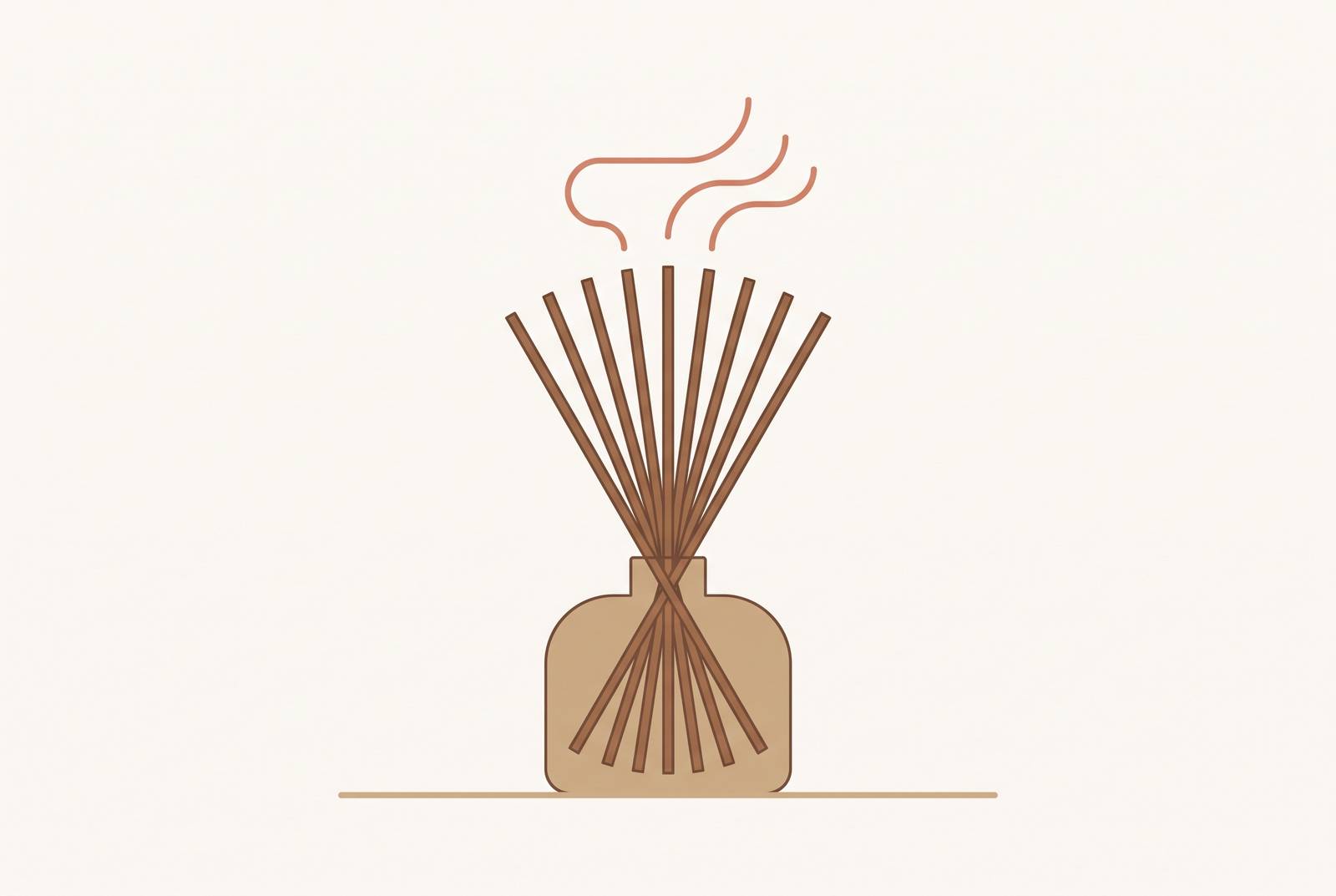
Reed diffusers run on capillary action, the same principle that lets a paper towel climb up out of a spill on the counter. Rattan reeds are shot through with tiny internal channels, and oil travels those channels from the submerged end to the exposed tip, where it evaporates into the room. No pump, no heat, no flame, just physics doing quiet, unglamorous work on a shelf somewhere.
Reed material decides how well that process runs, and this is where most people buy the wrong thing without knowing it. Natural rattan is the benchmark: porous, fast, consistent. Fibre and pourex reeds are manufactured stand-ins with varying results depending on construction quality. Bamboo shows up in a lot of diffuser sets because it photographs nicely on a shelf, but skip it if you can. Its node-like internal structures clog easily, and a clogged reed wicks slower and throws weaker scent. The reed that looks best in a styled product photo is often the one doing the worst job in the bottle.
The bottle itself is part of the mechanism, not just packaging. A narrow neck slows the rate oil meets open air, throttling evaporation without cutting it off. A wide-mouthed vessel does the reverse, exposing more surface area and burning through oil faster. Then there's the oil base itself. Alcohol-heavy formulas hit fast and strong, a big scent punch almost immediately, but they burn off quick and don't stick around. Alcohol-free or slow-evaporating bases trade some of that initial punch for a longer runway. Clean, plant-based oils without phthalates or harsh solvents behave more predictably through the whole process, which matters more in a house with a dog or a toddler sniffing around at nose height.
None of this gets fixed after the fact. Reed material, bottle shape, and oil base set the ceiling on lifespan before a single reed gets flipped. Everything from here on is about how close the setup gets to that ceiling, not how to raise it.
How bottle size and reed count set the outer limits of lifespan
Oil volume is the bluntest instrument available: more oil, more time, no real subtlety to it. A 30ml bottle with two or three reeds runs dry in two to three weeks. Step up to 50ml with three or four reeds and it's one to two months. The familiar 100ml bottle with four to six reeds is the three-to-four-month workhorse most households buy without thinking twice. Jump to the large-format 500ml bottles with 12 to 15 reeds and lifespan stretches to six to twelve months, though at that oil volume the reeds need swapping more often or they clog under the sustained draw.
Reed count is the one dial available after purchase, and it's a straight trade-off, not a free upgrade. More reeds means more surface area pulling oil upward, which means stronger scent and a shorter life, full stop. Load a standard bottle with five to seven reeds and expect roughly two to three months. Pull back to three or four and the same bottle stretches to three or four months, sometimes longer.
Nobody hands over an owner's manual for this, so the instinct on day one is to jam in every reed the box shipped with. That instinct is wrong, and it's the single most common way people shorten their own diffuser's life without realizing it. Start light instead: three to five reeds in a small room, adding one at a time until the throw feels right. Spacing the reeds so air circulates around each exposed tip actually improves diffusion efficiency, which usually means fewer reeds get the job done than expected. Maximum fragrance and maximum lifespan pull in opposite directions, and no bottle delivers both at once.
How room conditions, temperature, airflow, and humidity, accelerate or slow evaporation
Temperature is the most aggressive lever in the whole system. A diffuser sitting on a sunny windowsill, or perched above a radiator, empties noticeably faster than the identical bottle in a cooler, shaded corner. The sweet spot for steady diffusion sits between 18°C and 24°C, which happens to be roughly where most homes already sit without anyone adjusting a thermostat for the diffuser's benefit.
Airflow cuts both ways, and that's what trips people up. Zero air movement means scent molecules just hang in a cloud around the bottle and go nowhere, so a diffuser stuck in a dead-still corner underperforms even with fresh oil in it. But airflow that's too aggressive, next to a vent, a box fan, or a door to the outside, strips scent out of the air before it settles into the room at all. That's a bad trade twice over: oil still disappears quickly, but coverage gets worse for it. The goal isn't maximum air movement and it isn't stillness either. It's air gentle enough to shift a curtain slightly without billowing it.
Humidity plays a quieter role but it's still in the mix. Dry air, the kind that comes from winter heating or a naturally arid climate, speeds evaporation up, while a bit more humidity slows it down and lets scent linger. Stack temperature, airflow, and humidity together and the worst case is easy to picture: hot, dry room, fan running, basically a wind tunnel for oil molecules. The mirror image, cool, slightly humid, gently circulating, is close to ideal. Room size sits on top of all of it. Reed diffusers are built for roughly 300 to 500 square feet. Ask one to fill a great room with vaulted ceilings and it'll burn through oil trying, without ever actually filling the space it's fighting.
Where to place a reed diffuser to balance scent throw and oil conservation
Placement is where heat, airflow, and light all get decided in a single move. Set the bottle down in the wrong spot and the worst-case scenario from the section above just happened, without anyone meaning for it to.
Skip windowsills and anything that catches direct sun. Heat plus UV exposure accelerates evaporation faster than almost anything else on this list. Skip the top of a radiator or anywhere near a heating duct, same reason. Skip the spot right beside an air conditioning vent or an exterior door, where turbulent airflow strips scent before it has a chance to settle.
Countertops, open shelving, and side tables with normal ambient air work best. Entryways and hallways are the classic example for good reason: foot traffic stirs up gentle, intermittent airflow that carries scent through the space without spiking the evaporation rate, which is exactly why a small table by the front door keeps showing up as the default spot. Central placement in a room generally beats a corner nobody walks past, and elevated surfaces, mantels, higher shelves, help scent spread in rooms with tall ceilings. In a larger home, two or three modest diffusers spread across rooms usually beats asking one bottle to cover an entire floor. The workload and the fragrance both spread more evenly that way.
One habit worth adopting regardless of placement: slide a small tray or plate underneath the bottle. Flipped reeds drip, and a ring on a wood console table is a completely avoidable problem.
The maintenance habits that meaningfully extend diffuser life
Reed flipping is the step everyone's heard of, and almost everyone overdoes it. Flipping exposes the oil-saturated end to open air, refreshing scent once it's started to fade, but flip too often and that exposed oil evaporates faster than it should, quietly shortening the bottle's whole lifespan. Every seven to ten days is one recommended rhythm, per Durance, and flipping a few reeds at a time, rather than the whole set at once, gives a gradual refresh instead of a sudden spike followed by a faster fade.
Reed replacement is a separate task, and it's the one people forget entirely. Over weeks, reeds pick up dust and residue, and the oil saturating them reaches a point where internal pores stop wicking efficiently. The tell: scent has clearly faded even with plenty of oil left in the bottle, and flipping the reeds doesn't bring it back. Swap reeds every four to eight weeks, sooner if they look dry, cracked, or discolored. Never reuse a set across different fragrance oils, either. Whatever scent soaked in the first time doesn't fully leave, and the next oil comes out smelling like a compromise nobody asked for.
New reeds need a head start, too. Let them sit submerged for about 15 minutes before the first flip, so the reed saturates fully instead of sputtering unevenly for the first few days. If a room's going to sit empty for a stretch, cap the bottle or wrap it in plastic film to stop evaporation cold while nobody's around anyway. Before refilling a vessel with a new scent, rinse it with warm soapy water or diluted vinegar and let it dry completely. Leftover residue from the old oil will mess with the new one.
And skip the idea of stretching a bottle with water, tempting as it sounds. Oil and water don't mix, wet reeds warp, and a warped reed loses its ability to wick anything at all.
Why a diffuser that seems to have stopped working may still be full
Walk past a diffuser fifty times a day and the brain does something specific: it stops registering the smell. That's olfactory fatigue, sometimes called nose blindness, a documented feature of how the sensory system handles constant background stimuli. The diffuser can be working exactly as designed, oil wicking, tip evaporating, scent filling the air right on schedule, while the person who lives there genuinely can't smell any of it anymore.
The usual response makes things worse. Convinced the diffuser's died, people start flipping reeds obsessively or crowding in extras, which just burns oil faster without touching the actual problem. The diffuser was never broken. The nose adapted, and no amount of extra reeds fixes a sensory system that's simply tuned itself out.
Here's the simple test: leave the room for a stretch, then walk back in. If the scent hits on the first breath, the diffuser's fine. And if guests keep commenting on how good the house smells while the resident insists they can't smell a thing, that's not malfunction. That's biology doing its job a little too well. One practical fix, when the bottle finally runs dry: switch scents for the refill. New fragrance molecules reset the adaptation, and the house smells fresh again, at least until the nose catches up a second time.
When a reed diffuser reaches its limits and what genuinely performs better in its place
Reed diffusers are passive by design, and that's exactly where both the appeal and the ceiling come from. In spaces up to roughly 300 to 500 square feet, passive evaporation is plenty. Push past that footprint into an open-plan living and dining space with high ceilings, though, and the same bottle that worked fine in the powder room can't generate enough throw to fill that much air.
Heavy HVAC airflow creates a similar mismatch: a diffuser fighting a running air handler is diffusing into a room that's constantly diluting whatever it manages to put out. And no reed diffuser, whatever the reed count or oil formula, can be scheduled. It runs continuously until the oil's gone, which is the wrong tool for anyone who wants a strong scent in the evening and nothing overnight, or who wants actual control over how much oil gets used and when.
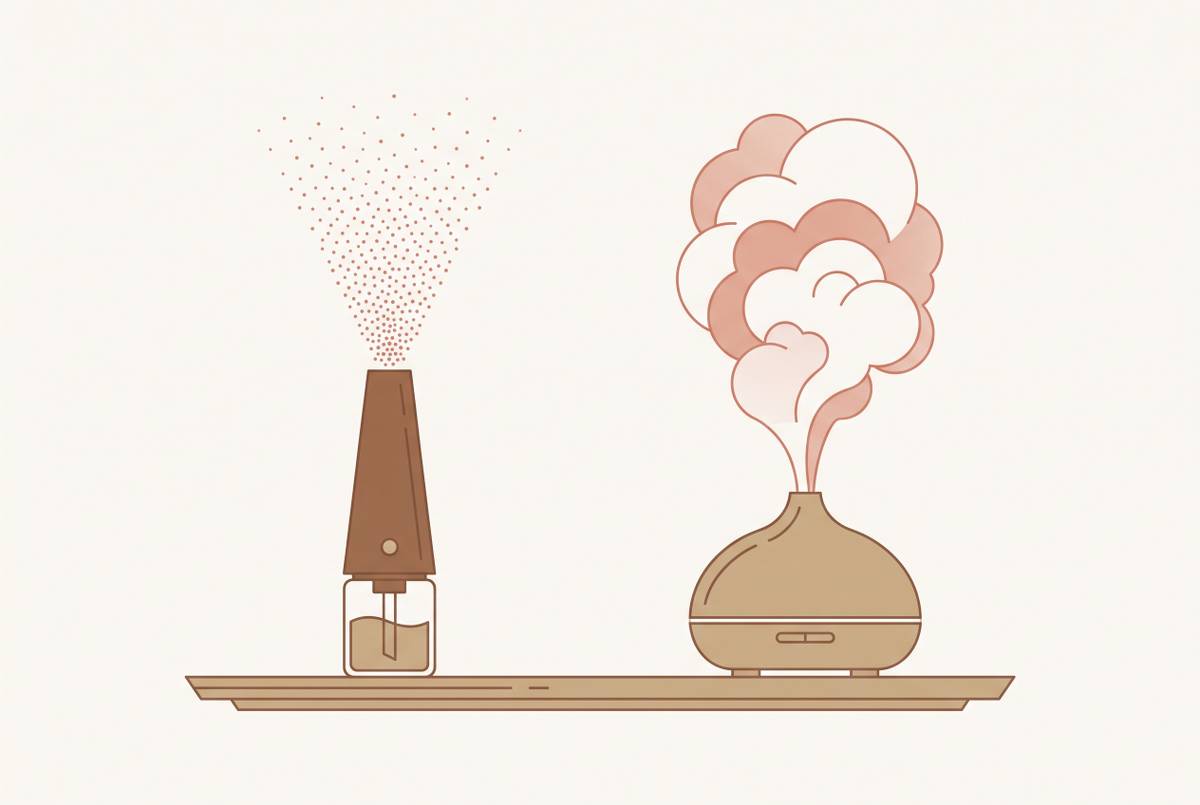
Past a certain square footage, or past a certain need for control, a reed diffuser is the wrong tool, not a weaker version of the right one, and that distinction matters more than most people give it credit for. Cold air diffusion solves the mismatch directly. It disperses fragrance oil without passive evaporation and is generally better suited to larger spaces than a reed diffuser. Smart cold air units add scheduling and intensity settings on top, so output becomes a decision instead of a constant, which tends to mean less wasted oil overall, not more.
None of this makes the reed diffuser obsolete. It still does the small-room, low-maintenance job better than almost anything else, sitting quietly on an entryway table asking nothing of anyone. Match the format to the square footage, and let the room, not the packaging, decide which technology actually belongs in it.