Diffuser Oils for Stress and Anxiety Relief at Home
Smell bypasses your brain's security checkpoint, directly influencing anxiety and mood.
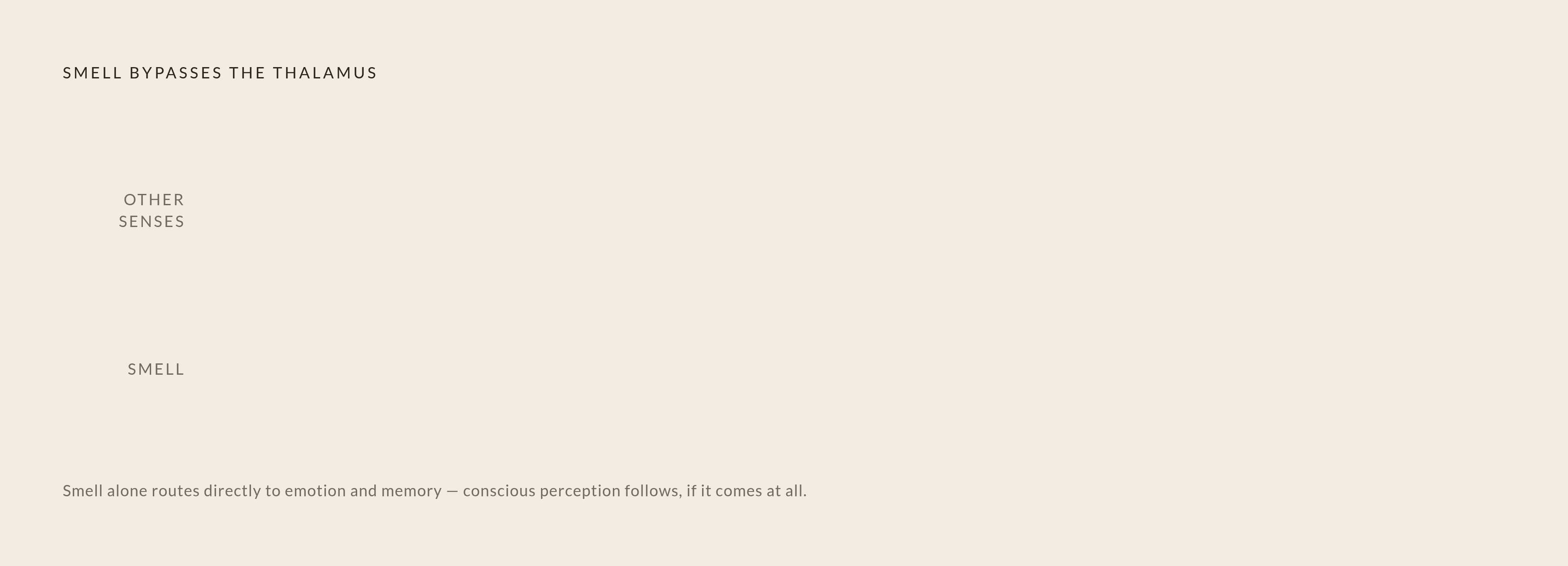
What makes the olfactory system strange, and I mean strange compared to every other sensory pathway in the body, is its architecture. Think of it as a secret passage that bypasses the brain's usual security checkpoint entirely.
When you see something, hear it, or feel it, that signal routes through the thalamus (the brain's central relay station) before reaching the cortex for any recognizable processing. Smell doesn't wait in that queue. Odor molecules bind to receptors in the nasal epithelium and transmit signals directly to the olfactory bulb, which connects almost immediately to the amygdala and the hippocampus: emotional processing and memory formation, respectively. The detour through conscious cognition comes later, if it comes at all. This is why a particular scent can shift your emotional state before you've registered that anything changed. The nose is, structurally, a back door to the parts of your brain that decide how you feel. No other sense has that access.
From those limbic structures, the downstream effects extend further. Some aromatic compounds influence serotonin and dopamine activity, the neurotransmitter systems most directly involved in mood stabilization and the general sense that things are manageable. Lavender's primary active compound, linalool, has been studied for its interaction with NMDA and GABA-A receptors, the same systems targeted by many pharmaceutical anxiolytics. It also increases overall GABA levels, which reduces nervous system excitability in a way that is directionally similar to what a low-dose benzodiazepine does. The magnitude is emphatically not comparable. But the receptor-level mechanism is real, which is a more substantive claim than most wellness products can make.
The physiological signals are becoming measurable. EEG research has documented increased alpha-wave activity (the mental state associated with relaxed wakefulness, calm but not drowsy) in participants inhaling lavender. A 2025 resting-state fMRI study at UCLouvain found that healthy participants inhaling lavender for 14 minutes showed increased functional brain connectivity. Early imaging evidence, yes. But early is not the same as weak.
What the research hasn't yet established, at scale, is precisely how much effect, under what conditions, and for whom. That uncertainty is real. It does not, however, collapse the mechanism.
What the clinical research actually shows. And where its limits are
The most rigorous single synthesis of aromatherapy evidence for anxiety is a 2023 systematic review and network meta-analysis published in Frontiers in Public Health, covering 44 randomized controlled trials across 50 study arms and more than 3,400 anxiety patients, testing ten kinds of essential oils. That is the largest evidence synthesis in this space to date. Worth naming clearly before anyone reaches for "purely anecdotal."
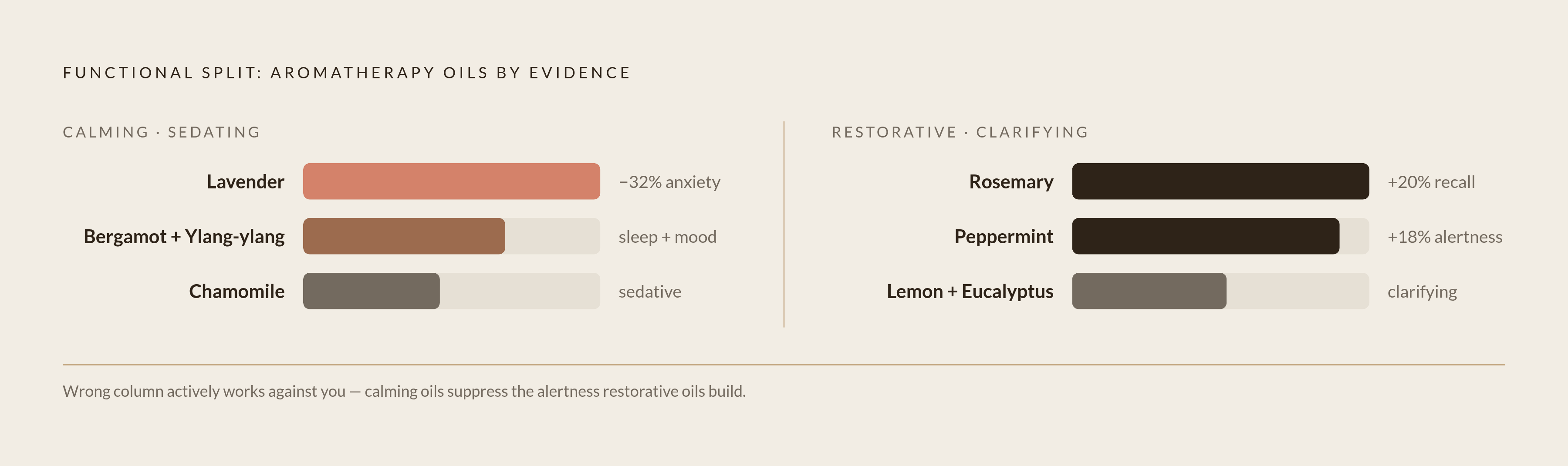
Within that body of evidence, lavender is the standout. A randomized controlled trial published in Frontiers in Psychology found that lavender essential oil reduced anxiety symptoms by 32% in patients awaiting minor surgery, with corresponding reductions in heart rate and blood pressure. Physiological markers, not just self-report. A 2024 double-blind RCT in Current Research in Complementary & Alternative Medicine specifically tested diffusion as a delivery method for stress and anxiety in healthy young adults, one of the few trials that isolates the mechanism most home users are actually relying on. Across these studies, 15 minutes of consistent inhalation emerges as a practically useful threshold for producing measurable effects.
That said, a narrative review hosted on ResearchGate found little support for the broader medical benefit claims sometimes attributed to aromatherapy, including disease treatment or clinical-grade intervention. That limit is real and worth respecting. What the evidence does support, with reasonable consistency, is symptom management: anxiety, stress, sleep quality, mood. Useful. Not miraculous.
For managing how you feel at home, for taking the edge off a stressful day, for building an environment that supports sleep and nervous system recovery, the evidence is meaningful. For treating diagnosed anxiety disorders, it is an adjunct at best, and framing it otherwise is a disservice to people who need more than a diffuser. Knowing which category you're in shapes how seriously to take everything else in this article.
The oils with the most meaningful evidence for stress and anxiety relief
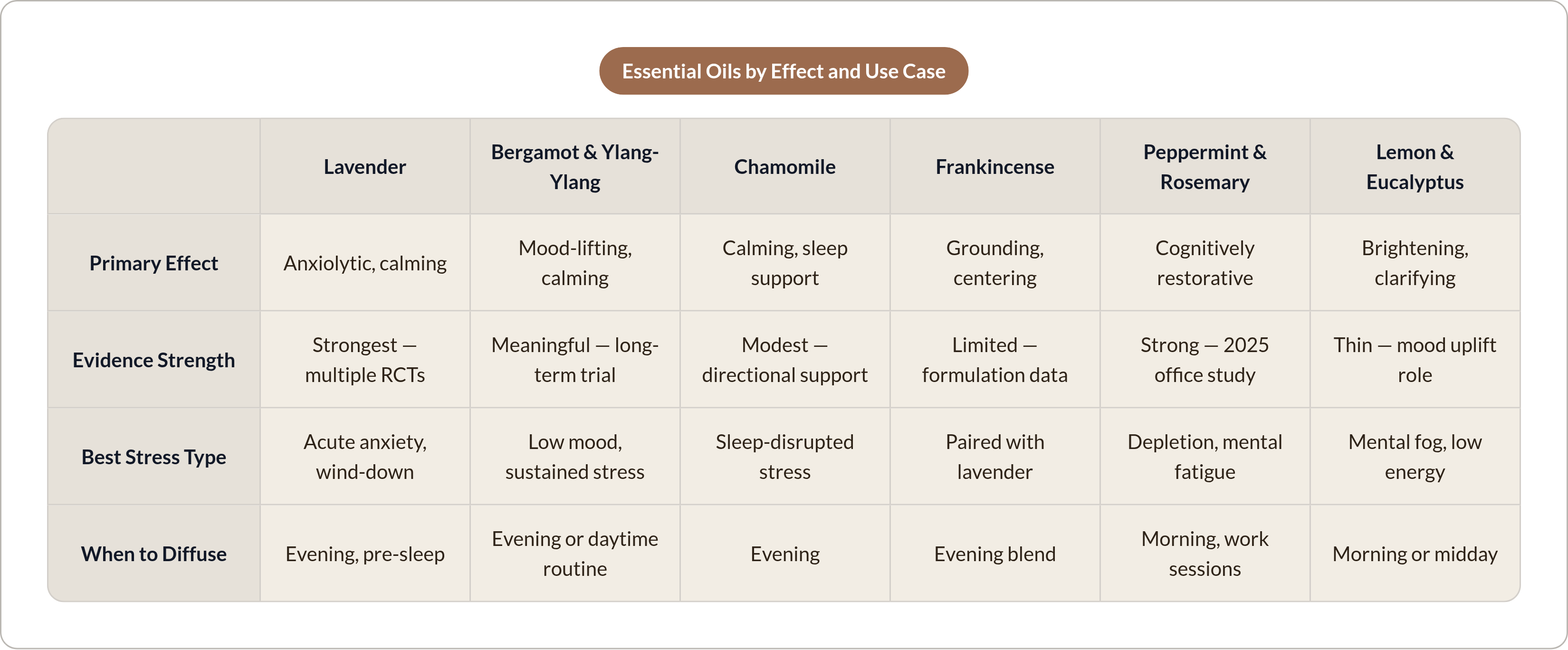
Not all calming oils are equivalent. The distinction between evidence-supported and "pleasant scent with aspirational marketing copy" matters, particularly when you're trying to produce a specific effect.
Lavender is, by a significant margin, the most studied aromatic compound for anxiety and stress. It accounts for a substantial share of all essential oil sales worldwide, per Fortune Business Insights 2025 data. That market dominance probably isn't accidental. The convergent evidence across the 32% anxiety-reduction RCT, the EEG alpha-wave research, and the UCLouvain fMRI work makes linalool the most defensible single-oil choice if the goal is stress relief.
Bergamot and ylang-ylang, particularly in combination, have meaningful support from a different angle. A Japanese clinical trial testing daily aromatherapy use in elderly patients found a notable reduction in depressive symptoms alongside improvements in sleep and social engagement. What makes that trial relevant here is what it actually tested: long-term daily use, not a single-session effect. If your interest is building a sustained routine rather than a one-off experiment, this data point deserves your attention.
Frankincense appears consistently in stress-reduction blends alongside lavender, often described in terms of its grounding, centering quality. The research base is less developed than lavender's, but it shows up in well-designed formulations often enough to warrant inclusion. Chamomile occupies similar territory: smaller evidence base, consistent directional support for sleep and anxiety applications.
The picture shifts noticeably with rosemary and peppermint. A 2025 study in the International Journal of Environmental Research and Public Health found that diffusing these oils in office environments improved memory recall and alertness by 18 to 20% and reduced mental fatigue. These are not sedating oils. They are cognitively restorative, relevant for stress born from depletion and mental overload rather than acute anxiety. Lemon and eucalyptus occupy adjacent territory: brightening and clarifying, with thinner direct evidence for anxiolytic effects but a legitimate role in mood uplift and mental clarity.
That raises an important question about blending. Combining oils with complementary evidence, lavender with frankincense being the most common example, can plausibly provide a more complete stress response than any single oil alone, given the distinct receptor pathways involved. The clinical literature hasn't well-established synergy effects yet, so treat that as a working hypothesis rather than a certainty. But it's a plausible one.
What this all means practically: lavender, chamomile, and bergamot-ylang-ylang are calming oils. Peppermint, rosemary, and lemon are restorative and clarifying. Diffusing the wrong category for the wrong kind of stress isn't just inefficient; it's a category error. Reaching for a sedating oil when you need cognitive recovery, or an alerting oil when you need to wind down, actively works against you.
Why the diffusion method shapes how much benefit you actually get
This is where a meaningful portion of home aromatherapy goes quietly wrong. The delivery method is not a trivial variable, and most people treat it as one.
The clinical research documenting aromatherapy effects used controlled inhalation conditions: consistent aromatic concentration, defined duration, reliable delivery. Replicating that at home requires more deliberateness than most diffuser purchases involve.
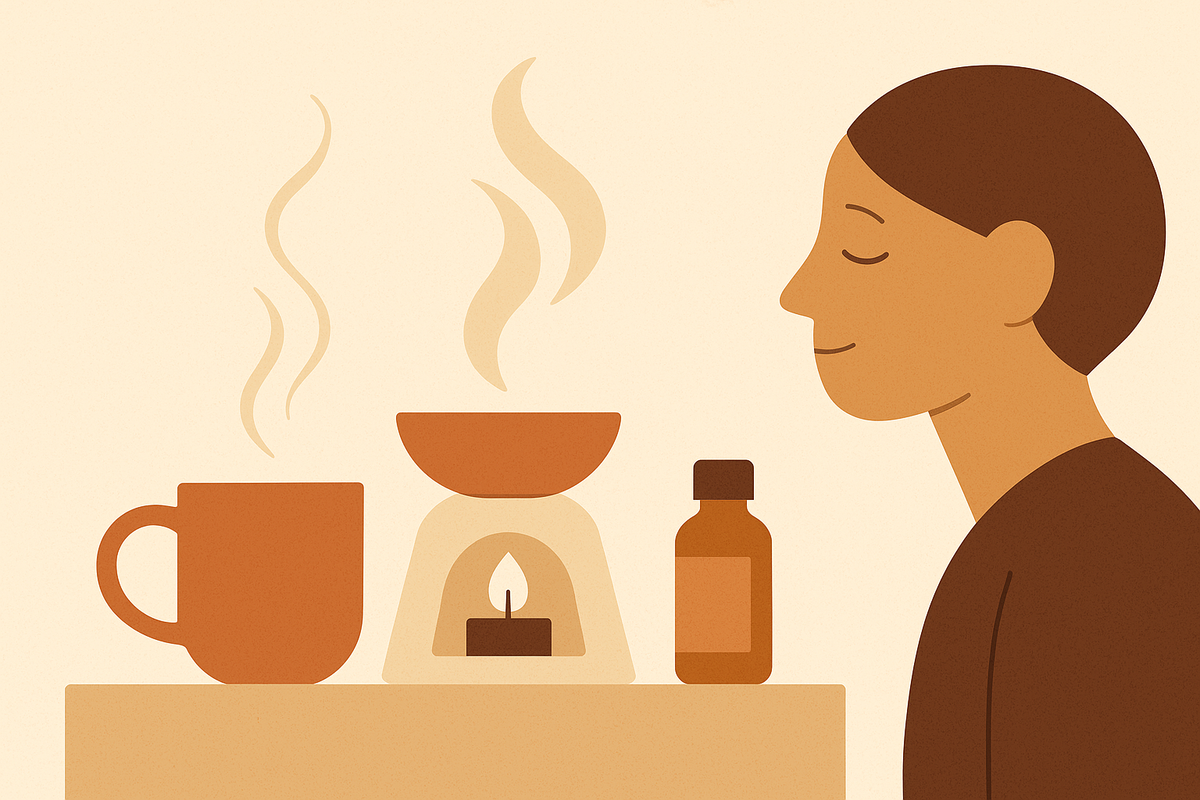
Heat-based diffusion (warmers, candles, heated stone diffusers) breaks down aromatic compounds through thermal degradation. You get the olfactory experience of lavender. You get substantially less of the linalool driving its documented anxiolytic effect. The smell and the active molecule are not the same thing.
Ultrasonic or water-based diffusers dilute the oil before dispersing it, introducing moisture as a carrier. Aromatic concentration is inconsistent by design, and performance diminishes as the water reservoir empties. This is the most popular category of home diffuser. It is not the most therapeutically reliable one.
Candles introduce combustion byproducts and chemically alter fragrance compounds in the process of burning. Whatever their aesthetic appeal, they are among the least controlled delivery systems for anyone seeking a specific aromatic effect.
Cold air diffusion atomizes oil directly into fine particles without heat or water. The full aromatic profile, including the active compounds, is preserved. Concentration is more consistent throughout the session and across the room. For therapeutic stress relief specifically, where the research baseline is 15 minutes of consistent inhalation at a meaningful concentration, a delivery method that fluctuates in intensity or degrades the active compound will undermine the effect even when the right oil is loaded into it.
For readers with therapeutic intent, that design criterion is worth weighing directly.
Intensity, timing, and placement. The variables most people get wrong
More scent is not more calming. An overwhelming aromatic concentration becomes an irritant — like trying to have a quiet conversation at a concert. The olfactory system registers intensity as a potential threat before it catalogs it as pleasant, which is why a heavily fragranced room tends to produce tension rather than relief. The therapeutic target is a consistent background level — noticeable enough to register, not so concentrated that it demands attention.
Matching diffuser output to room size follows from this. A device calibrated for a large open-plan space running in a small bedroom over-concentrates. One undersized for a living room won't achieve consistent coverage. Neither reproduces the controlled-inhalation conditions the research measures.
Timing is where most people fail in a specific, correctable way. The 15-minute inhalation threshold means the environment needs to be prepared before the stress event, not assembled during it. Pre-setting diffusion to start 30 minutes before a difficult meeting, a known high-anxiety window, or an intended sleep onset tends to produce a different outcome than switching on a diffuser when the stress is already acute.
Evening and daytime diffusion should use categorically different oils. Diffusing peppermint at 10 p.m. or lavender during a morning sprint actively works against the intended effect. This should be obvious. It apparently isn't, because the same people running lavender around the clock are wondering why they feel foggy in the morning.
Placement is underappreciated. The diffuser must be in the actual breathing zone of the space where the person is sitting or resting — not tucked in a corner, not blocked by furniture, not adjacent to an HVAC vent that will dilute and redirect the scent before it reaches anyone. Central placement at counter or table height generally outperforms corner or floor placement for coverage and consistency.
Finally: diffusing continuously for hours produces olfactory adaptation. The nose stops registering the scent, which also reduces the neural signal the limbic system is responding to. Intermittent sessions, 30 to 60 minutes on with intervals off, tend to maintain the calming signal better than treating the diffuser as continuously-on background infrastructure.
What to know about safety. For yourself, your household, and your pets
The natural origin of essential oils does not make them unconditionally benign. Worth stating plainly.
The terpenes present in many essential oils, including linalool, can react with indoor ozone to form secondary pollutants under certain conditions. Diffusion is substantially safer than combustion on this metric, but poorly ventilated spaces warrant attention. Individuals with asthma or COPD should be particularly cautious: eucalyptus and peppermint can function as respiratory irritants despite producing a short-term sensation of easier breathing.
The ingredient transparency question becomes sharper when you examine synthetic fragrance oils. The "fragrance" designation on a product label can legally conceal dozens of individual chemical compounds, including phthalates, volatile organic compounds, and formaldehyde precursors, none of which require individual disclosure. For stress-relief use specifically, an oil reformulated with undisclosed synthetics will not contain the active compounds (linalool being the clearest example) that the clinical research links to anxiety reduction. You will be inhaling something that smells like lavender and shares none of its therapeutic mechanism. Transparent ingredient disclosure is not just an ethical preference; it is a functional requirement for anyone using these oils with any therapeutic intent.
Pets represent a distinct and specific concern. Cats lack the liver enzyme pathways necessary to metabolize many aromatic compounds safely. Tea tree oil, eucalyptus, and several other widely recommended oils are documented as toxic to cats at meaningful exposure levels. Dogs are more tolerant but remain sensitive to high concentrations. A well-ventilated, appropriately diluted approach using oils verified as safe for pets is the responsible baseline if you share your home with animals.
The practical mitigation for most concerns is ventilation. Diffusing in a room with some air exchange, a cracked window or a ceiling fan on low, reduces secondary pollutant concentration without meaningfully undermining therapeutic scent levels.
Building a home scent routine that reliably reduces stress over time
Neuroplasticity research suggests that consistent, repeated exposure to a calming scent can strengthen the brain's association between that scent and a relaxed state over time. The effect can accumulate rather than plateau if the routine is structured to support it. Small, consistent deposits with a compounding return — think of it less like flipping a switch and more like watering a plant: nothing dramatic on any given day, but the growth is real.
The practical structure follows from everything established above. In the morning, a clarifying oil (lemon, peppermint, or rosemary) diffused during the first hour at a desk supports the alertness and reduced mental fatigue documented in the 2025 office research. In the evening, lavender alone or in a lavender-frankincense blend, started 30 minutes before an intended wind-down period, makes use of the documented 15-minute inhalation window before the target physiological state needs to arrive. Session lengths of 30 to 60 minutes with intervals off prevent olfactory adaptation. Rotating oils periodically keeps the nose from habituating to a single scent and gradually tuning it out.
Smart scheduling on a connected diffuser removes the friction of remembering to set this up when you're already stressed. The scent environment is prepared in advance, not assembled reactively, which is actually the whole point.
Some might argue that this level of intentionality is excessive for what is, at its core, plugging in a diffuser. That's a fair pushback. But consider what the research is actually testing: consistent inhalation at a meaningful concentration, timed correctly, using the documented active compounds. Every variable that diverges from those conditions reduces the probability of producing the measured effect. The people diffusing lavender sporadically from a candle warmer and wondering why they don't feel calmer aren't experiencing a failure of aromatherapy. They're experiencing a failure of conditions.
A cold-air diffuser, running the right oil, at the right output level, placed correctly, timed deliberately, and loaded with documented clean ingredients makes that 15-minute inhalation window happen reliably and repeatedly. Used that way, it is not passive room décor. It is an active tool for shaping the emotional quality of your home. Whether you treat it like one determines whether it works.